A Need to Disconnect

This is part two of a two-part essay. The first part, which you can read HERE, focused on the problem. This week, I do my best to offer a solution.

It seemed like a good idea at the time. Desperate times called for desperate measures. Even if someone could have foreseen the dangers that lay far ahead, what other choice was there. They could not concern themselves with future generations. If they didn’t do something now, there would be no future generations.

So Joseph bought all the land in Egypt for Pharaoh. The Egyptians, one and all, sold their fields, because the famine was too severe for them. The land became Pharaoh’s, and Joseph reduced the people to servitude, from one end of Egypt to the other. …  Joseph said to the people, “Now that I have bought you and your land today for Pharaoh, here is seed for you so you can plant the ground. But when the crop comes in, give a fifth of it to Pharaoh. The other four-fifths you may keep as seed for the fields and as food for yourselves and your households and your children.” 

“You have saved our lives,” they said. “May we find favor in the eyes of our lord; we will be in bondage to Pharaoh.”  (Genesis 47:20-21, 23-25)

This is how the Bible records the origin of Hebrew enslavement to Egypt. It starts in the midst of a terrible famine. It’s the socioeconomic backdrop that we don’t often notice raging behind the drama of Joseph and his brothers. Year by year, the peoples of Canaan and the other surrounding regions find themselves unable to grow crops, unable to raise animals, unable to hunt or forage. And Joseph, who has ascended all the way to Pharaoh’s cabinet, responds to the suffering of a lot more people than his remorseful siblings.

skywalker 2

Joseph’s family are the Skywalkers within a Universe full of other compelling stories.

Of course, by establishing a system of civil servitude and taxation based on the productivity of Egypt’s subjects, Joseph has also opened the door to oppression. Though he is essentially the first taskmaster the Israelites will know, at least he is kind. He understands their plight. He strives to create a system that maintains balance.

But Joseph cannot live forever.

Then a new king, to whom Joseph meant nothing, came to power in Egypt. “Look,” he said to his people, “the Israelites have become far too numerous for us.”…

So they put slave masters over them to oppress them with forced labor, and they built Pithom and Rameses as store cities for Pharaoh. But the more they were oppressed, the more they multiplied and spread; so the Egyptians came to dread the Israelites and worked them ruthlessly. They made their lives bitter with harsh labor in brick and mortar and with all kinds of work in the fields; in all their harsh labor the Egyptians worked them ruthlessly.  (Exodus 1:8, 11-14)

More often than not, oppression is the go-to tool of an empire. To keep a heavy hand upon the common rabble is not simply a way to exert power. It is a way to prevent the people from considering any other power but yours.

Still, in the story of the Israelites’ toil in Egypt, we see more than just a picture of oppression. We see the ingeniously cruel amalgamation of oppression and productivity, of enslavement and efficiency. Despite such persecutory suffering, Pharaoh’s demand for endless toil somehow still breeds blind allegiance! Consider what the Israelite elders say to Moses and Aaron after their royal court disruptions, which only serve to enrage Pharaoh who turns around and accuses the Israelites of laziness – laziness! – and ups the ante on their brick-and-mortar production quotas.

…they found Moses and Aaron waiting to meet them,  and they said, “May the Lord look on you and judge you! You have made us obnoxious to Pharaoh and his officials and have put a sword in their hand to kill us.”  (Exodus 5:20-21)

Today, when we read this story, we shake our heads at the infamous Israelite stubbornness, how they lash out at the very people working for their deliverance! We fail to recognize that systems of endless productivity and efficiency make us oblivious to what real freedom looks like when it actually presents itself.

phone

This sermon is a little long for our taste. Glad we brought something to pass the time.

In my previous post, I ranted about addressed this same oppressive reality in our society today. We may not struggle under the thumb of a tyrannical Pharaoh, but we are fools to deny that numerous, present-day taskmasters aren’t woven into our own cultural fabric. They hide behind so much of what we have come to accept as modern-day realities, often whispering even behind simple phrases like “normal society,” “status quo,” “tech-savvy,” “bonus check,” or “Sorry but I’ve got to take this call.”

I also wrote about a new law that took effect in France this year, which places restrictions on large companies regarding their employee’s connectivity to work e-mails and messages; it is a small yet significant step in trying to give people back some semblance of rest, a portion of their existence not wholly defined by occupational pursuits. And it is the very thing that so frightened and enraged Pharaoh.

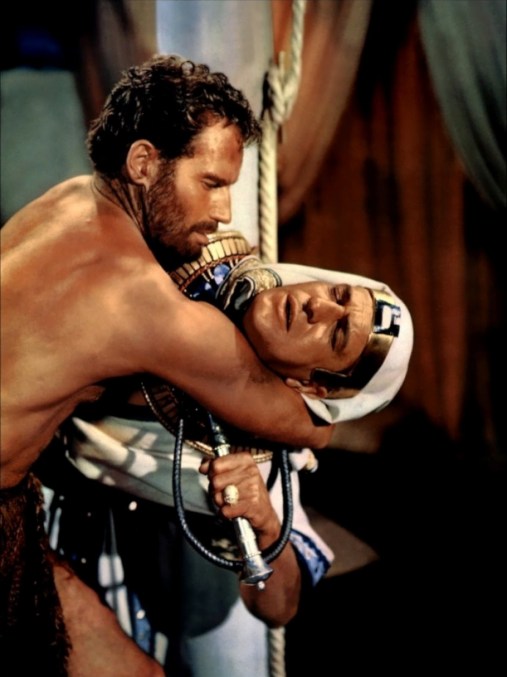
Cecil B. DeMille’s epic The Ten Commandments is an iconic piece of cinema, but it doesn’t get everything right about the Exodus story. The most memorable of all its lines – “Let my people go!” – is deceptively inaccurate. Moses and Aaron did not swagger into the royal court as tenacious liberators, brazenly offering Pharaoh a lose-lose deal. No, their request was much tamer. “Let my people take a break” would be a more accurate line. All they asked for, at least at first, was a spiritual retreat – essentially a three-day weekend – in which the Israelites could pilgrimage into the wilderness and offer sacrifices to their God.
Ten Commandments

Also, Ridley Scott wasn’t the only one to envision Egyptian and Semitic peoples as slightly tanned Caucasians.

Pharaoh refuses not because a three-day retreat would mean three days of limited brick and mortar production. Remember, the productivity quotas imposed on the Israelites were designed to oppress, to weary, to strip away every defining aspect of who they were, except hopeless slaves. This almost impossible workload was instituted so they would have no time whatsoever to indulge in their own sociocultural identity. After all, awakening to the reality of who you truly are – and what you were made for – poses the greatest threat to the powers of oppression.

Why? Because you start to realize you may not actually need them anymore. That there might be another way of life. One that liberates rather than subjugates. One that frees rather than abuses.

This, by the way, is the Rosetta Stone of interpretation we should apply to the Law, which is given to the Israelites on the other side of the Sea of Reeds after the waters effectively annul Joseph’s citizen-slave system. Consider how the Book of Exodus introduces the Ten Commandments:

And God spoke all these words: “I am the Lord your God, who brought you out of Egypt, out of the land of slavery…”  (Exodus 20:1)

Every single law and ordinance and regulation flows from this foundational identity, and should be understood as pointing back to the principles of the Lawgiver, rather than arbitrary codes of conduct for a fledgling nation. God is the Deliverer. He is the breaker of chains. He is the new taskmaster that, in stark contrast to Pharaoh, desires his servants to live in peace and prosperity, to live free from the wearying, life-sapping bonds of endless productivity and efficiency.

Game of Thrones Season 3 Review

Copycat.

For any who may not be convinced by this, consider what the fourth commandment is, and the way both Exodus 20 and Deuteronomy 5 describe it. “For in six days the Lord made the heavens and the earth, the sea, and all that is in them, but he rested on the seventh day.” If the greatest Ruler/Creator/Designer/Builder dedicated a day to complete rest (the Hebrew word, menuha, literally means “to cease”), and, what is more, if out of every single piece of creation it was this day of complete rest that He chose to call “holy” (qadash), you can be certain He wants His subjects to do far more than honor it. He wants them to experience it.

Let’s consider that fact for an additional moment. In the Creation poem that opens our Bibles, only one thing is explicitly deemed “holy.” It’s not the vast Pacific. It’s not the majestic Rockies. It’s not even the man and the woman, made in God’s own image. Sure, they’re called “good,” but only the seventh day – the Sabbath – is actually called holy. This day in which God ceases from extraordinary, glorious productivity – this is what must be declared most excellent, set apart, and preserved.

The French legislation is known as the “right to disconnect law.” But God’s law already has one. It is a “need to disconnect law.”

Sabbath, at its core, is about disconnecting from the cultural obligations and expectations to produce, to want, to crave, to be stimulated and insubstantially satisfied by the world’s systems. As Jesus corrected the Pharisees, the Sabbath was made for man. It should never be defined by deprivation or a list of don’t-do-and-can’t-do’s; instead, we should see it as a happy return to the freedom and peace we have already been given by our Great Deliverer. It is a day we devote to face-to-face connection with our families, cultivating deeper relationships with friends, celebrating the extraordinary beauty of this short life, and worshipping the One who made the world and called it very, very good.

France’s passing of a “disconnect” law should give us pause. It should remind us that insatiable productivity is an ever-present threat, and the assumption that everyone should always be connected – dialed in to the Matrix – is not a passing fad. Even in a society that prides itself on individualism and personal freedom, Pharaoh’s identity-sapping edicts are alive and well.

And just like in Egypt, it thrives off our wearied acquiescence to the system. It feeds off a culture that spinelessly shrugs its shoulders and says, “I can’t afford not to check my e-mails, answer my phone, come in on a Saturday. I can’t afford not to check my Facebook feed, respond to these texts, be one of the 300,000,000 people who viewed this video…”

rest

What are you talking about? I’m quietly sitting still in a mostly dark room. How is this not restful?”

What would it look like if not just a negligible minority of us but rather a whole country full of Christians (not to mention Jews) decided to truly observe the Sabbath for what it was always intended to be? What would happen if, for a single day each week, we turned our backs on all the professional obligations and nagging responsibilities that incessantly demand our time and energy, and also set aside all the tools and gadgets that sneakily tether us to unquenchable compulsions? What would happen if, instead, we pursued the things that gave us true rest? The things that restored our awareness of freedom, intimacy, joy, and celebration.

While the stresses of daily life and work would remain, I suspect our weariness of them would lessen. I don’t think we would so often lament how busy we are. Maybe we wouldn’t be so quick to consult our phone screens when we’re in the company of other people. Maybe we’d even become a little kinder. A little more patient. A little more peaceful.

Because that’s what deliverance does. It changes your life.

Imagining the Divine: A Response to Tim Challies

Recently, author and blogger Tim Challies, whose articles and book reviews I read on occasion, wrote a preemptive review of the upcoming film, The Shack, which itself is based on the 2007 novel of the same name by William P. Young.

fb-share-img

Prepare to be Hallmark movie-ed!

Preemptive review may not be the best term. Challies’s piece, entitled “Why I Won’t Be Seeing (or Reviewing) The Shack,” is a critical review of the core conceit around which the story revolves – a grieving, guilt-stricken man meets and is counseled by the Triune God (i.e., Father, Son, and Holy Spirit) who manifests in different human forms. Challies contends that such a representation of God is iniquitous, if not heretical, and his choice not to watch the film is a way of escaping an act of sin.

Of course, Challies can make whatever decision he likes regarding whether or not to see, or review, a feature film. He’s a grown man, a devoted Christian, and I do not deny that his choice may stem from deeply personal issues in his own spiritual development.

However, I believe Tim Challies has made a fundamental error in labeling the film The Shack “dangerous” simply because it casts human actors in parts that are meant to represent the divine persons of the Holy Trinity. And, taken to its logical conclusion, this error is actually an unwitting assault on imagination and creativity, two incredibly valuable faculties gifted us by our Creator.

Allow me to explain…

What is Lacking?

Tim Challies puts forth one particular passage of Old Testament scripture that he believes explains why a film version of The Shack, in which human actors will visibly and audibly portray the three persons of the Trinity on giant movie screens, is hazardous to one’s true understanding of God.

I take this to be a clear, serious violation of the second commandment: “You shall not make for yourself a carved image, or any likeness of anything that is in heaven above, or that is in the earth beneath, or that is in the water under the earth. You shall not bow down to them or serve them, for I the LORD your God am a jealous God, visiting the iniquity of the fathers on the children to the third and the fourth generation of those who hate me, but showing steadfast love to thousands of those who love me and keep my commandments” (Exodus 20:4-6). I will not see the film, even to review it, because I will not and cannot watch humans pretend to be God.

I have to hand it to Challies. He has conviction. But you know who else had conviction? The Pharisees.

67101969

Now, comparing someone to a Pharisee in this day and age is usually assumed to mean that someone has become so concerned with religious legalism that he or she has lost sight of the gospel of Jesus. But this is not what I mean when I compare Tim Challies’s staunch rejection of The Shack to pharisaical behavior. What most Christians often forget about the Pharisees – or never learn in the first place – is how incredibly devout they were, how deeply they committed themselves to personal physical purity, and how exceedingly inquisitive they were of the Scriptures. In almost every case within Greco-Roman history of the Jewish world, the Pharisees are the spiritual heroes. They insisted on faithfulness to God’s Word. They sought to interpret and explain every single word and verse of the Torah in order to more deeply commune with the Creator. They continually clashed with Roman and Jewish authorities alike out of an insistence that Jewish religious expression should maintain purity and ethicality. Thus, ninety-nine times out of one hundred, the attitude and behavior of a Pharisee was directly in keeping with what modern Christians would consider a righteous person. As such, the Pharisees really only lacked one thing.

Imagination.

Time and again, when the Pharisees clashed with the teachings of Jesus, it was not because his teaching style was suspect, or because he was openly rejecting the Torah. Rather, what the Pharisees disliked about Jesus was his way of portraying God, and, by association, the purpose of various aspects of the Law that God gave to Moses. Regularly, Jesus told parables that fleshed out certain characteristics of God, or certain actions of a faithful disciple, and usually these stories scandalized the Pharisees’ painstakingly assembled understandings of theology and spirituality. And it is also worth noting that, in these parables, God is often portrayed through human characters: a bridegroom, a gracious king, a searching shepherd, a celebrating woman, a wounded father.

the-expulsion-from-the-temple-1

Thank God first century Jerusalem didn’t have a film industry. Imagine the carnage!

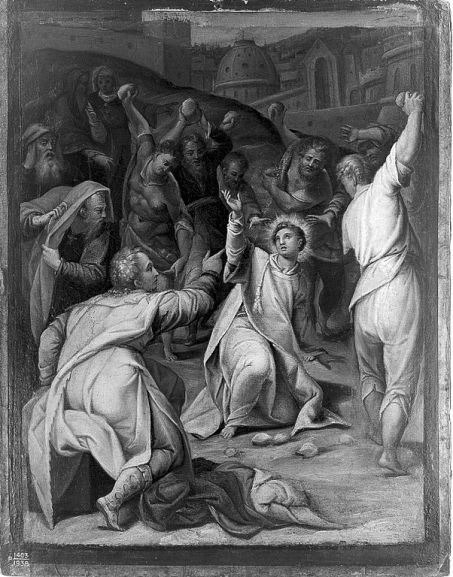
But the topper – the assertion that really drove a wedge between Jesus and the majority of the Pharisees – is when Jesus himself claimed to be divine. To their eyes, this was a poor, upstart rabbi from a suspect town, possessing a suspect education, and he had the gall to say to them, “I tell you truly, before Abraham was, I AM!” (Jn. 8:58). If Jesus was nothing more than a poor, upstart rabbi, his utterance of these words was an offense deserving of public stoning. And since the Pharisees lacked the imagination – the creativity of mind and the expectancy of heart – to see Jesus as anything more than what his physical appearance revealed, they went on seeing him as such, and their pious conviction endured that what Jesus needed was a good, public execution.

What’s the Purpose?

Tim Challies is concerned that the physical, visible portrayal of any member of the Trinity – except perhaps the Son (since Jesus was also fully human) – is tantamount to blasphemy. He argues that it is impossible to accurately depict the holy Other-ness of a divine God through any kind of human guise. He even cites the second of the Ten Commandments to further his point. All of these arguments seem pretty solid.

And yet, integral to the Christian faith is our understanding that God chose not simply to command and direct humanity from his position of Other-ness, but instead chose to become flesh and blood and live in our midst (Jn. 1:14). Even though the historical person of Jesus of Nazareth is not made out of stone, it would seem that God violates, or at least sidesteps, his own commandment in order to help his chosen people grasp his true purpose for them.

bale

Though, if movies are to be believed, he was most certainly chiseled.

After positing the commandment as his reasoning for not viewing the film, Challies admits, “I will grant that the primary concern of the second commandment is worship. It forbids creating any image of God in order to worship God through that image. Yet the commandment first forbids any visual representation for any reason. Whether that image is used to better worship God or better understand God, the commandment covers it.” He goes on to insist that while Jesus might get a pass, it is sinful to portray the other two Persons of the Trinity, the Father and the Holy Spirit (even though the commandment of course makes no such distinction).

Really, Tim? So, did you seek forgiveness that time you looked up at the ceiling of the Sistine Chapel (or viewed a photograph of it)? Did you shut your eyes whenever one of your history textbooks included an artistic rendering of God visiting Abraham at Mamre, or the Holy Spirit coming like fire at Pentecost? Did you run away screaming at the sight of Far Side cartoons or the trailer for Bruce Almighty when Morgan Freeman had the audacity to dress in a white suit and pretend to be God? Just how far does this self-righteous conviction, currently directed at a book you obviously don’t like, extend?

You are correct in your assessment that the commandment was chiefly concerned with worship. But like a Pharisee, you stretch it across as many specific cases as possible in a nervous effort to obey it.

2814154115_8f5cec9be5_b

I hope this benefits your team, cuz you’re gonna burn for it!

It doesn’t take a Bible scholar to recognize that when you differentiate the application of the Ten Commandments based on the different Persons of the Trinity, you steer your boat into murky theological waters. Refusing to look upon any human portrayal of God the Father or the Holy Spirit is not simply imposing limitations on theological investigation – it is spurning human capacity for imagination and creative cognition which was given to us by our Creator! Nowhere in the entire Bible is there the stipulation that portraying the human form of Jesus is acceptable while any other representation is verboten. Why not? Because God understands there is a big difference between seeking to understand more about him by envisioning him in more familiar contexts, and actually fashioning an idol for the purpose of bowing down and invoking its power and authority for our lives. I mean, c’mon, Tim. Surely you can see this difference.

Look, I’m not a huge fan of The Shack either. I read it. I appreciated some parts, disagreed with others. I am a pastor, so, yes, some of the things the three God-characters tell the main character rubbed me the wrong way. But I understood that it’s a story. A work of imagination. It is as unlikely to be worshipped as this blog post is. So, at no point did I break out into an anxious sweat because William P. Young was tempting me to picture God in human form.

And if you don’t think there’s anything sinful about that act of imagination, as long as we don’t “flesh out” those characters on a movie screen, then the thin-ice semantics by which you are applying the commandment is astounding. Because, for all its little flaws (yes, little flaws), the purpose of The Shack is to spur people’s imaginations about what God is like. It is meant to challenge our theology not with blatant falsehoods but by asking us to consider whether we have unintentionally adopted a culturally acceptable view of our Creator, and, in so doing, collapsed into a lazy, shallow faith.

Does it get everything correct? Absolutely not. I wouldn’t expect it to. But I got to have some great conversations with church members and seekers about the nature of God when the book came out back in 2007. If the movie is at all similar in its impact, then this is all the more reason why a writer/reviewer as intelligent as Tim Challies should not refuse to review it. Perhaps his insights and corrections of what is portrayed on-screen could help people better process their own grasp of theology and soteriology.

Too bad Tim’s obedience to God’s command prevents him from offering such help.

Embracing Imagination

Again, I do not deny that Tim Challies’s decision is based on a desire to maintain faithfulness and obedience to the God he loves, and believes loves him.

But it is a dangerous thing to cite Scripture as a reason not to engage in theological exploration, even if it comes in the form of the movie version of a mediocre book. The commandments are not a leash. Rather, they are meant to set God’s people apart from a lawless, morally relative world. To obey God’s commandments is to live in such a way that people see the characteristics of God in you – love, goodness, forbearance, honesty, integrity, purity.

the_stoning_of_st_stephen-_oil_painting_attributed_to_orazio_wellcome_l0010582

Oddly enough, though, they shouldn’t lead you to do this.

In his “Sermon on the Mount,” God himself reminds us that true obedience is dependent upon the internalizing of each commandment. Thus, “You shall not murder” is as much about holding grudges and nursing hatred as it is spilling another person’s blood. “Remember the Sabbath day and keep it holy” is not simply a compulsory day-off as it is a directive that resting and relishing the rejuvenating presence of God is the only thing that will sustain us in this mad, mad world. And “You will not make for yourself a carved image” is an insistence that the creation should never attempt to comprehensively define its Creator.

In an essay entitled “Invisible Things,” the great songwriter-poet Rich Mullins writes:

He is the image of the invisible God. He is incomprehensible to our Western minds – as He was to Eastern ones. He came from that great beyond that no human mind has visited. When we true to squeeze Him into our systems of thought, He vanishes – He slips through our grasp and then reappears and (in so many words) says, “No man takes My life from Me.  No man forces his will on Me. I am not yours to handle and cheapen. You are Mine to love and make holy.”

Perhaps Tim Challies will read words such as this and think, “Exactly! Human actors should never portray God!”

But my understanding of God’s command is a bit more nuanced. No, I will not carve his image out of stone (or wood or sand or Lego bricks or George Burns’s face) and offer my worship to it. But I will keep seeking a deeper understanding of who my Savior is. Christianity is about a relationship with God, and I want to know the One to whom I am engaged. I want to think about Him more, and in more profound ways, and whatever medium will help enhance and mature my worship of Him, then I say, “Bring it on.”

May you not be afraid to imagine the divine. May you believe in a God who insists not on cold allegiance to law but rather ardent worship that flows freely from your heart, soul, strength and mind. And from your eyes, ears, nose, mouths, hands, and feet…