I’ve given up trying to have hip musical tastes. Life’s too short. I’m a month shy of 40, and I just want to listen to what I like. So, that usually means the Americana stylings of The Avett Brothers, the acoustic-driven songs of Gregory Alan Isakov, Josh Ritter, or Iron and Wine, or the smooth folk-jazz of Over the Rhine. I no longer concern myself with the Top 40 or the zeitgeist of pop, R&B, or hip-hop. As popular as these genres are, they don’t entertain or inspire me.
Hip-hop in particular was difficult to get into. I mean, I like “Lose Yourself,” but who doesn’t? I tried listening to Kendrick Lamar’s Damn after it won a Pulitzer, but it just didn’t resonate. It’s not that I think hip-hop is a lesser genre. It’s just never been my cup of tea.

The fact that I use the idiom “cup of tea” may be its own indicator.
Because of this, I have little interest in listening to Jesus is King by Kanye West.
Apparently that’s what every Christian under 45 years of age has been doing the last couple of weeks. If you haven’t heard, Kanye West has become a Christian, and he just released an album expounding upon his newfound faith. He has also stated he will retroactively adjust lyrics from past albums to make them less offensive.
As an exercise in theological evaluation, I suppose I am curious how exactly a notoriously narcissistic hip-hop star articulates the gospel after his conversion? Are his lyrics biblically sound or rough around the doctrinal edges? Is Scripture treated with reverence and respect, or culturally proof-texted to make a predetermined point? Then again, these are questions we should be asking of any album intended to proclaim the truth of the gospel.
My musical tastes will likely prevent me from asking Alexa to fill my kitchen with Kanye’s sick-yet-gospelized beats. Sorry, Kanye. However, I’m not wholly indifferent to news of your conversion. In fact, I’m far more curious about how our culture is treating that than the reviews of your latest studio effort.
What’s Really Going on Here?
It’s not Kanye’s new album, but rather his alleged conversion and the Church’s response to it, that intrigues me. I include “alleged” simply because I do not know Kanye, nor do I know the individuals in his life who claim to have witnessed his surrender to the gospel. I hope that his decision to follow Jesus as “King” is genuine. If it is, I believe it should be celebrated. After all, while I’m not hip enough to quote any of his lyrics, I’m familiar with enough pop culture to know Kanye’s reputation has been anything but humble and compassionate. Christians are right to celebrate when the gospel transforms a life, when a once self-involved individual starts serving the local church.
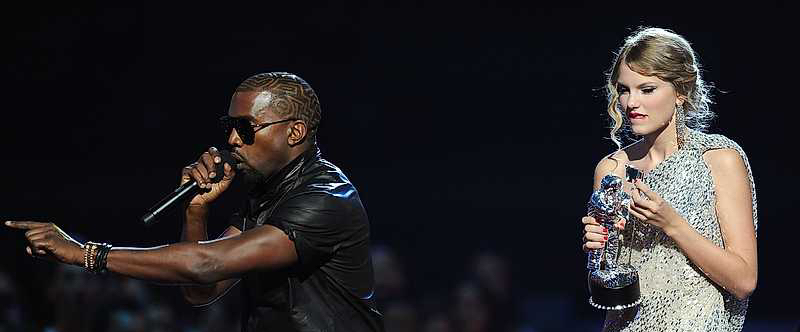
“I’mma let you finish, Pastor, but first, would the parents of Caleb Williams make your way to the nursery? He ate too many graham crackers and got a tummy ache…”
But here’s the thing: I’m not sure we can call what a lot of Christians are doing in relation to Kanye West’s conversion a celebration of the gospel. Perhaps this is a slip toward cynicism on my part, but what social media posts and religious publications are saying about Kanye’s life-change seem more akin to when your favorite sports team acquires a quality first-round draft pick. It feels like some of us are cheering the success of a team, instead of the power of the gospel. Meanwhile, the other side (the skeptical ones) are quick to doubt the conversion based on any number of assumptions.
We do this a lot, actually. For decades, Christians in America (particularly evangelicals) have struggled with the concept of celebrities professing faith. Sometimes this is a known Christian who becomes more active on the secular stage (think musicians like Amy Grant and P.O.D., or politicians such as Mike Huckabee and Jesse Jackson). When this happens, Christians quickly split into two main camps – those who applaud the person’s courageous choice to exemplify faith to a dark world, and those who question the genuineness of the person’s faith, instead labeling them either a sell-out or an apostate.

“They’re playing “Meant to Live” on the secular rock station. Switchfoot is dead to me now.”
This divide also surfaces when news breaks that a known celebrity has professed faith in Christ (e.g., Alice Cooper, Justin Bieber, the dude from Korn) or has been “outed” as a believer (e.g., Stephen Colbert, MC Hammer, Chris Pratt). Again, the camps form. Some Christians celebrate the person’s radical choice to turn from the wide gate and instead walk the narrow road of faith. Others scratch their heads and question whether the person’s faith is actually authentic. This is what we’re currently experiencing in the curious case of Kanye West.
In Search of Legitimacy
Often, when popular celebrities are revealed to be people of faith, this tends to legitimize them in the eyes of many believers. A kind of “team pride” dynamic emerges within Christian circles. Whether it’s Bob Dylan, Mel Gibson, or Kanye West, a lot of people feel the need to look back over a person’s career and point to moments that seem to indicate faith in the gospel, or at least an openness to it (“C’mon, man. Don’t you remember “Jesus Walks” from Dropout…“). Inevitably, some newfound fans will compare the newly converted to a certain Pharisee who experienced his own dramatic change of direction. They’re convinced that this one-time enemy of the faith is now a child of the light who will quite possibly have the same worldwide impact as Saul of Tarsus. After all, just consider their well-established platform, and all those current fans ripe for conversion now that their hero has surrendered to the gospel.

That’s how things worked out for Saul, right?
While some of these hopes lie in the realm of the possible, there are some troubling implications to them as well. First, it assumes the spread of the gospel is based as much in popularity as it is in relationship. Joe Schmo may be able to win a couple close friends to Jesus, but imagine how many lives will be touched when Bieber brings Hillsong United on his next tour. There’s no comparing which person will spark the next Great Awakening.
Second, we’re quick to celebrate a profession of mind, but are rarely interested in considering a subsequent change of action. Usually, this is because we don’t want to appear judgmental. However, Scripture reminds us many times over that faith devoid of action can hardly be called genuine. Jesus asked, “Are grapes gathered from thorns, or figs from thistles? In the same way, every good tree bears good fruit, but the bad tree bears bad fruit” (Mt. 7:16-17). And James reminded the Church, “Be doers of the word, and not merely hearers who deceive themselves. For if any are hearers of the word and not doers, they are like those who look at themselves in a mirror; for they look at themselves and, on going away, immediately forget what they were like” (Ja. 1:22-24). He would later go on to point out that a profession of belief is not enough. “Even the demons believe,” he wrote (2:19).
Now, I’m not saying we should subject new believers to unreasonable scrutiny – especially those we’re acquainted with only through a pop-culture lens. Formation in the Spirit is a lifelong process. Neither am I advocating we should pounce on a believer’s missteps as proof of illegitimate faith. We must remember, though, that it is a Christian’s life that testifies to the truth of salvation, not just a Christian’s mouth.
When holding out for this form of evidence from an allegedly converted celebrity is considered divisive, we have a problem. But the choice to wait-and-see is very often labeled as cynical, judgmental, or even the biggest insult one can throw at a fellow Christian: pharisaical.

It’s considered offensive and uncouth for Christians to express skepticism at stories of famous people professing faith. Elvis Presley, Tyler Perry, Deion Sanders, every other country music singer… Questioning the authenticity of a celebrity’s profession of faith (true repentance or just a passing fad) often gets you accused of overly pietistic faith. “Someone has come along who can, by his mainstream appeal, validate Christian devotion!” some say. “But look at all the spiritual party-poopers threatened by what they can’t understand.”
I know I do not feel threatened by Kanye’s profession of faith. I’m not even sure what “side” I’m on. I’m certainly not with the doubters. If anything, I’m cautiously optimistic that his is genuine repentance. What I’m waiting for, though, is spiritual fruit, which Jesus reminds all of us is the evidence of true faith. An album called Jesus is King isn’t enough, just as Slow Train Coming and Saved weren’t enough for Dylan. There is more to following Jesus than writing a handful of Christ-themed songs.
What I am threatened by – or perhaps the better word is “concerned” – are those who defend a celebrity’s conversion not out of any actual familiarity with the person, but rather out of a desire to protect the legitimacy they feel a famous person’s faith now gives their own. If Dylan or Bieber or Kanye can be Christians, that must mean my own faith is not incompatible with the mainstream. Christians can be cool. The Church is back, baby!

“If Lady Gaga would go to church a little more, maybe Mom would let me listen to her albums…”
The Idolatry of Image
While our first experience of repentance may resonate in our very bones, it remains no simple task to follow Jesus daily. In twenty years of ministry, I’ve witnessed countless conversions – people prostrating themselves before sanctuary altars, teenagers walking aisles in tears, all-night conversations with skeptics who finally, in the wee hours of the morning, bow their heads in humble recognition of the Great Mystery. These were powerful moments all.
And yet, I need only glance at my Facebook feed to recognize not every one of these once-repentant souls are currently bearing spiritual fruit. While many lives were radically changed, others never really were. Some who passionately professed belief and spoke words of surrender returned to their old ways not long after that experience. A few have walked away from faith altogether, chalking up their conversion experience to naïveté or ignorance.
The point of this post is not to dismiss the genuineness of confession, nor is it to ponder whether one can lose his or her salvation. I’m merely pointing out that repentance, while central to our salvation, is only step one. Being remade by the Spirit is actually a lifelong process, and to be a true spiritual leader of others requires a lot more than having a built-in platform. There is good reason why Saul backed away from public life for three years before finally engaging with the apostles in Jerusalem (Gal. 1:15-18). Conversion is a glorious bloom, but if it’s going to blossom then a commitment to grow in faith – to be corrected, trained, and formed by the truth – must be joined with it. Saul of Tarsus did indeed have an extraordinary impact on the spread of the gospel, but that impact was not immediate. Several years passed between the Damascus Road and his first missionary excursion.
I have no reason to discredit Kanye’s fervor for the gospel, nor do I doubt the lyrics in Jesus is King come from a genuine passion for his Savior. However, what I know the man needs now is the opportunity and the space to grow in his faith, especially considering the materialistic, self-seeking celebrity culture in which he has lived for so long. Good trees don’t bear good fruit overnight.

Saul went to Arabia. Maybe Kanye should spend three years in the Mojave.
We in the Church have a bad habit of making idols out of famous converts. To pin our hopes to their redeemed coattails and bask in the glow of our own newfound legitimacy. We would do better to treat these people like the young brothers and sisters in Christ they actually are. We should pray for them, and pray against the onslaught of temptation, the whispers of the Evil One who will try to tell them they were just going through a phase, just experiencing a moment of weakness, when they offered that sinner’s prayer.
So, maybe I should give Jesus is King a listen. Kanye’s beats may not be my cup of tea, but, while I don’t know the man personally, that doesn’t mean I can’t pray for him to grow and to learn and to prosper. And it doesn’t mean I can’t change the way I respond to these reports of celebrities who profess faith – entrusting each one to the Lord, and calling upon his name and his influence to bring about the furthering of his purposes.
It’s in Jesus and Jesus alone I place my trust. After all, as Kanye’s album reminds us, he is the King.





 Windblown