“C’mon, do it.”
Nothing good ever follows so potent a turn of phrase. No gold medals were ever won on “C’mon, do it.” No job promotions were ever bestowed following a “C’mon, do it.” No Michelin stars awarded because somebody egged on Alain Ducasse with a “C’mon, do it.”
There I sat in the vice principal’s office, a quivering baby bird fallen from the nest. Face contorted in anguish, rivulets of tears running south, knuckles pale and clutching the arms of the office chair dragged in front of the big man’s desk. All because of those three magic words: “C’mon, do it.” Compelling in the moment, sure, but absolutely absurd to offer as an explanation for my behavior. And that’s what he wanted, this brooding authority figure who towered over me like a thunderhead.
What could I say?
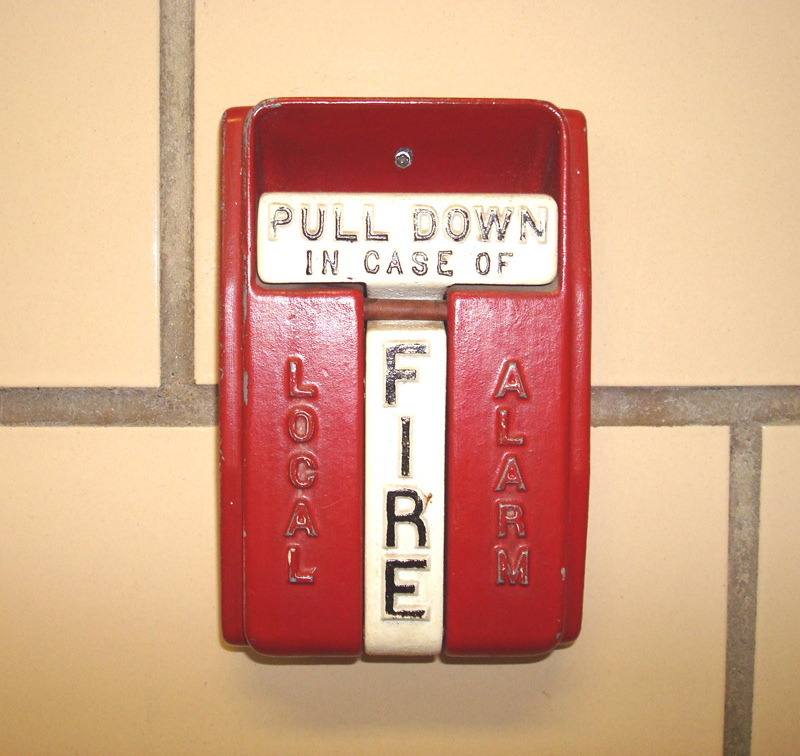
The lever of the fire alarm hung limp and ineffectual, as ripe for plucking as the fruit of Eden’s trees. It was broken – it had to be. All the boys in seventh grade suspected it was. They would flick it as they passed from the showers to the lockers, watch it bounce uselessly in its place.
God, that changing room was a Darwinian jungle! Within its chaotic confines, the meek dressed hurriedly, awkwardly, while the gleefully pubescent stalked the corridors bare-chested, whipping towels and blasting farts to establish dominance. That fire alarm was merely a trinket, just a thing on the tiled wall for us to consider and inspect and dare one another to pull even though we all knew it was disconnected. All the other levers of all the other fire alarms throughout the school building looked a lot newer than the one in the locker room. Covered in protective glass, they were the kind with the little metal mallet that you had to lift and then swing downward forcefully to break the glass “in case of emergency,” at which point you would take hold of the exposed lever and pull. These levers, I will add, did not hang limp from the mechanism like the one in the locker room. No, they were ideally fixed in place. Clearly, these were the functioning alarms, placed in obvious and obviously strategic places and regularly inspected by professionals, ready to alert every soul in the building to any given crisis.
“It doesn’t work.”
“I bet it does.”
“Nuh uh. It’s disconnected.”
“Why don’t you pull it then? All the way down. See what happens.”
“Nothing’ll happen. It’s broken.”
“It’s probably been here since the fifties.”
“The school ain’t that old, dumbass!”
“I’ll pull it.”
“No, you won’t.”
“I pulled it the other day.”
“Did not.”
“Did too!”
“Nuh uh, you liar.”
“Yeah huh! You didn’t see, but I did.”
It could go on like this for ten minutes straight, every day the same stupid insistences and know-it-all claims interspersed between the mocking and the jeering and the snickering and the flatulating. Over the course of that school year, just about every kid – big and small, mean or mild – was dared to give the allegedly broken lever a tell-tale tug, and yet no one was ever willing to do more than flick it or jiggle it or lift it slightly and let it fall back to its inoperative state.
No one, that is, until yours truly.
“Hey, Vern!”
Because I went by my real name back then, that’s usually how most of the boys addressed me, each one doing his most obnoxious Ernest P. Worrell accent, thick as used motor oil. And no matter how many times the sneering salutation came, I found it impossible to ignore.

“Hey, Vern.”
I’d look up.
“You suck at basketball.”
Muffled, derisive chortling.
“Hey, Vern.”
I’d turn around in my school bus seat.
“Where’d you buy those faggoty-ass shoes?”
Snorts, sniggers, and conspicuously averted eyes.
“Hey, Vern.”
In the cafeteria cue, peering down the tray line.
“Who taught you how to tight-roll your jeans?”
Cackles and high fives all around.
Small mercies, this wasn’t an everyday occurrence for me. A plethora of ugly ducklings waddled the halls of Dahlstrom Middle School, which meant most of the time it was possible to blend in to the crowd like Schwarzenegger slathering himself in mud. When changing, my usual modus operandi was to dress quickly, quietly, and efficiently – if that meant forgoing deodorant or even a shower, so be it. Most of the time, I could get in and out without attracting attention. But not this day.
“Hey Vern.”
I turned. One of the towel-snappers was chuckling and glancing sidelong at the other alphas.
“Dare you to pull the alarm.”
“It doesn’t work.”
“Then pull it.”
“Yeah, Vern, pull it.”
“C’mon, do it.”
Of course, I could have refused. I could have brushed off the dare. But all of us lowly locker room lambs knew from experience that choosing to ignore the howls of the wolves in our midst was tantamount to rolling over and exposing our soft bellies to their glistening fangs. In this particular version of Truth or Dare, the only hope of avoiding further ridicule was to choose Dare, though even then the chances were slim. But, at the very least, you had to show these bullies you were willing to play in their reindeer games. Go through the motions, show them you could be cool, even if such a designation was solely theirs to bestow. The whole thing was a pathetic and hopeless undertaking, like investing in cryptocurrency or making a New Year’s resolution to join Gold’s Gym. Your coolness was never really within reach.
“Whatsa matter?”
“You scared?”
“It doesn’t work.”
“Then just pull it!”
I reached up and gave the flaccid lever a meager jab. It bounced impotently in its place. That was, of course, not enough.
“C’mon, do it.”
It was broken, I told myself. It had to be. No working fire alarm would look like this, would be left so temptingly exposed in a middle school boys’ locker room. I wrapped two fingers around the T-shaped lever, felt the feeble lightness of the plastic. It was absurd to believe so flimsy a thing could hold any legitimate influence over a 25,000-square foot academic complex. Absurd to expect anything would happen.
And nothing did. At least, not at first.
No clanging bell. No bleating siren. The locker room fell into a brief, anticipatory silence. Finally, someone had the(recently descended) balls to give that useless lever a demonstrative pull.
“See,” I said, relief flooding across my reddened face. “It’s broken.”
A number of grumbles arose from wolves and lambs alike. So, the mystery had finally been solved, the unknowable equation proven. It was slowly dawning on everybody that I’d just unwittingly put an end to every seventh-grade boy’s favorite 6th Period conspiracy theory. It’s a wonder they didn’t all flog me with their towels in punishment. In that disillusioning silence, the dare dissolved. There was nothing left to do but shake our heads, shoulder our backpacks, and slam our locker doors shut. We shoved our bodies against the crash bar of the exterior door that opened onto the school courtyard and headed out into the afternoon sun…

…only to behold dozens of lines of students exiting the classroom wings of the complex in a safe and orderly fashion. Teachers stood like shepherds overseeing their fleeing flocks, shushing the gigglers and keeping careful count to ensure none had been separated from the herd. Most assumed it was a drill, though the confusion on certain administrators faces spoke volumes.
So, the legends were true.
The lever wasn’t broken. The alarm worked after all.
*
“I want to know why you did what you did,” the vice principal insisted as I sat weeping in shame. “I want you to explain to me why you thought that was an intelligent thing to do.”
Intelligent? What a ridiculous notion! Intelligence had nothing to do with it. I was twelve years old. Pulling that lever was all hormones and impulse, a misfiring of my fight or flight response. No, even that wasn’t true. It had been a compulsory act. A kind of offer that, if you knew what was good for you, you couldn’t refuse.
At the same time, I was thankful his voice, while deep and stern, didn’t rise much in volume, nor did it grow overly heated. This was a welcome contrast from the P.E. coach who, only a few seconds after the crime was committed, had blustered into the locker room, crimson-faced and seething. Apparently, a gaggle of informants had squealed on me. I suspect, had there not been other boys present, that the coach might have strung me up in the gym by the climbing ropes and beat me with an aluminum bat.
I kept my head down in the vice principal’s presence, quietly sputtering the words, “I don’t know.” My shoulders quaked and my lips trembled. This was the only utterance I could offer in such a penitent state – my own three words, though there wasn’t a hint of magic in them. Only bewilderment and miserable resignation. Tears dripped from my chin and soaked the fabric of the office chair. “I don’t know,” I whispered again.
But I knew.
They’d dared me to, had set before me a choice that hadn’t seemed like a choice at all. Perhaps I could have demurred, could have turned my back, but there would have come with it a cascade of social consequences. No longer would I have been able to blend in most days. The goading would have multiplied. I would have been pilloried – presented daily before my peers to receive all manner of taunts, jeers, and pile-ons. How could I explain such a dilemma to this peeved and wearied administrator standing over me? What would it take to make him understand that my crime wasn’t carefully considered at all? Show me the seventh grader who has time for such nonsense?!
No, what I’d done was similar to the thing knees do when the pediatrician taps them with his mallet.
“C’mon, do it.”
Tap. Reflex. Tap. Reflex.

Thirty-two years have come and gone since that humiliating day, and I’m honestly uncertain whether my circumstances would have been any better if I’d somehow, and for the first time, been able to locate my backbone and stand my ground against those magic words. Sure, I’d have avoided a week of shameful in-school detention. I’d have escaped the scornful, how-could-you glances of my teachers, genuinely surprised by my recklessness. And, yes, I would have been spared a lengthy and particularly fidgety “conversation” with my parents.
But what would’ve become of me? Could I even have survived the remainder of middle school? In what world does the lamb stand up to the wolves and live to tell the tale?
Pulling that cursed alarm is the closest I’ve ever come to experiencing the peculiar, mystical relationship between fate and free will. In a certain light, it was a lesson in comprehending the doctrine of predestination. As Frederick Buechner puts it, “The fact that I know you so well that I know what you’re going to do before you do it doesn’t mean you aren’t free to do whatever you damn well please.” Exactly, Fred.
Choice. Does such a thing even exist? Perhaps I was always meant to capitulate to the pressure. Maybe that alarm was my destiny. I was chosen, by the omniscient mind of the Creator, for such a time as 6th Period P.E. For one brief moment in my twelfth year of life, I was appointed the Great Disruptor. The Despicable Delinquent. Look on my Cowardice, ye Mighty, and despair!
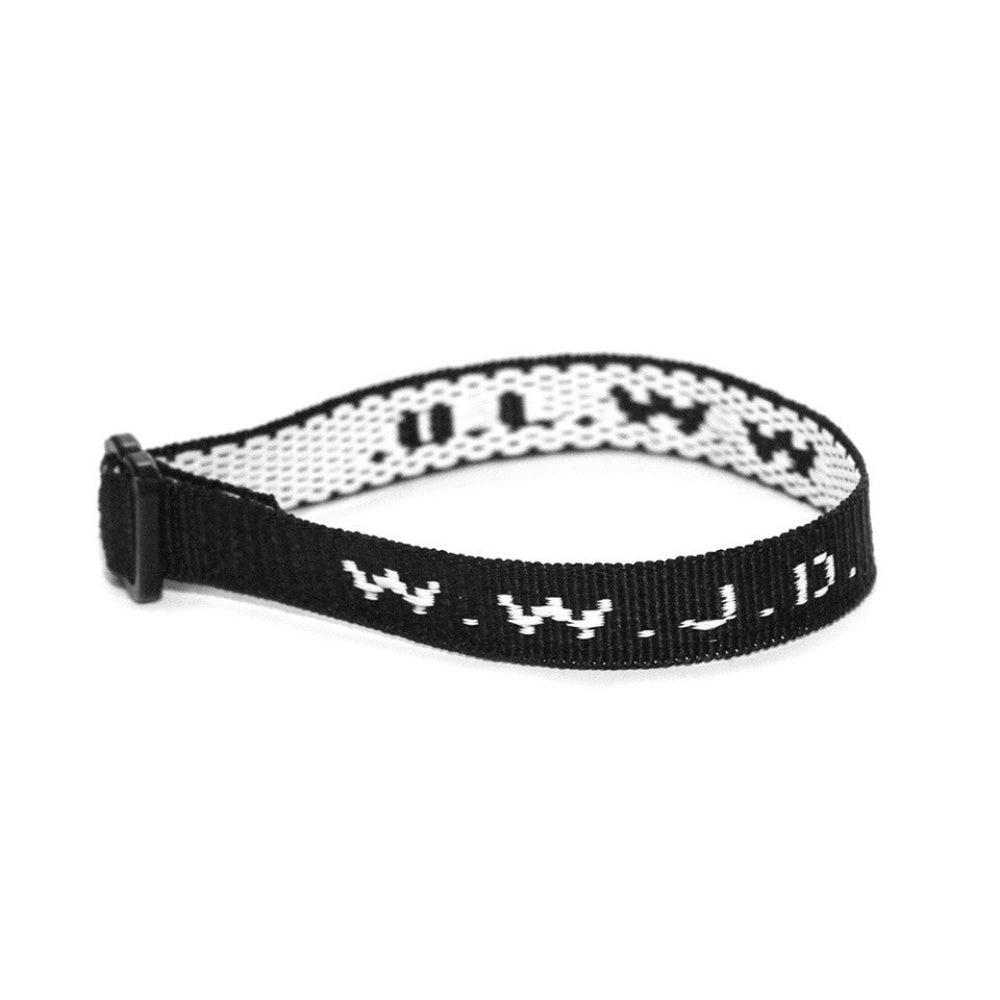
All things considered, it is a thorny endeavor to speak of choices to the young and hormonal. A middle schooler’s gauges are frequently going haywire, bouncing his impressionable mind like a pinball between impulse and intimidation, pressurization and provocation. I remember in my church’s youth group an oft-repeated Bible verse was the second half of 2nd Corinthians 10:5: “…and we take captive every thought to make it obedient to Christ.” The directive, as we understood it, was to not merely think WWJD? before we acted, but rather to filter everything – every question, every instruction, every challenge – through a well-oiled mental machine that would root out and expel all impurities. Any lustful urge. Any vindictive thought. Any rude retort. All of these would be sieved, and only perfectly distilled words and actions would remain.
No doubt, this is a wonderful ideal to espouse. However, it’s incredibly difficult to practice out in the real world, particularly in the presence of ravenous wolves. It’s like using a Revolutionary War musket to fend off Seal Team 6. You might have an initial blast of confidence, but by the time you reload they’re all over you.
Which brings me back to the concept of choice. Wisdom comes less from discipline than from experience, even the regrettable ones. Twelve years olds are not known for their wisdom, but neither should they be condemned for failing to use it. We grow, we learn, we put away most of our childish hang-ups. That, at least, is something to appreciate.
Even if I’m still unsure whether my middle school days would have been better had I resisted those three little words, I’m at least confident that I’ve matured enough over thirty-two years to say that middle-aged me would be up to the task. Today, I’m sure I could easily ignore the taunts and dares of those alphas, pick up my backpack, and walk out the door.
Pretty sure.
Let’s say, like, ninety percent.

 Windblown