Whatever Happened to Joy?

When I was attending seminary, I met a recently married couple who taught me something about an often overlooked struggle between ministry and witness.

Both were students pursuing their advanced degrees, and the more I and my fellow seminarians got to know them, the more we could see that they were made for each other. This was not a case of opposites attract. Quite the contrary. Their sameness was impossible to overlook. They spoke with the same quiet tone, they were both obvious introverts, and they were both exceedingly intelligent. But none of these similarities were as noticeable as how equally devoted the two of them were to a plethora of social causes. No matter what the topic of discussion might be in a given class, when either of them contributed, it was always with a fervent passion for justice and compassion. If you saw one’s mouth open, you already knew the gist of what was about to be fiercely spoken. There were a lot of students at the seminary who could be labeled as “activists,” but these two took the cake. They were are own pair of profusely bleeding hearts.

I don’t mean to disparage them for this. In many ways, this couple served as a much-needed conscience for a lot of us who were perhaps far too concerned with our GPA and our exam schedules than we were the problematic issues of our day, which at that time included such troublesome situations as the Afghanistan and Iraq Wars, the 2004 Presidential election, and ever-escalating prejudices of a society still reeling from 9/11. In many ways, this couple inspired us not to divorce what we were studying from why we were studying it. There was really only one thing glaringly wrong with this couple’s presence in our community.

They were huge bummers.

You see, it wasn’t that their concerns for a wide variety of causes were unfounded, or that their political stances were not legitimate, or even that they chose to spend most of their free time holding up picket signs or circulating petitions. The problem was that the more they went about this dedicated work of social justice reform, the more their attitudes soured. They became the two gloomiest people in the school. They were often far too indignant with the ills of society to constructively contribute to class discussions. They were moody and melancholic. They may have loved each other, but whatever newlywed bliss may have existed between them was overshadowed by outrage at cultural sins. They were overly contentious even with those of us – their seminary colleagues – who held differing views, stances, or philosophies than theirs. They may have been passionate ministers, but their witness was chiefly marked by anger and resentment. They seemed completely unwilling to smile or laugh because there was just too much suffering in the world and how could any of us privileged, first-world Christians dare smile or laugh at a time like this?!

So, yeah, huge bummers.
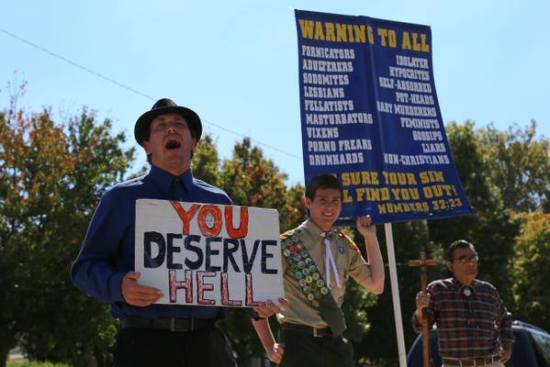
picketing

Ah, good times. Good times.

Changing Narratives

This is not a post about the pitfalls of social justice reform. In fact, I’m sickened by the way some of my Christians brothers and sisters guiltlessly disparage the so-called “SJWs” of this age. I don’t know what exactly has happened in the last century or so, but there was a time not that long ago when the Church (Catholic, Protestant, and Orthodox all) was positioned on the front lines of most social justice movements, including issues of equality, education, universal healthcare, and immigration. My own faith tradition, Baptists, were occasionally viewed as dangerous liberals not two-hundred years ago.

Just because some of our modern-day social justice issues may no longer align with a Christian worldview does not mean followers of Jesus (himself considered the equivalent of an SJW in the eyes of the first-century powers-that-be) should throw the baby out with the bathwater. We certainly shouldn’t buy in to every movement getting airtime on the news today, but neither should we allow ultra-conservative pundits to lump all social justice movements together as the workings of sinister agendas of people that hate us and our country. Give me a break!

No, this post is not about the important role played by social justice warriors. It is about the dangers faced by Christians of all stripes – those who embrace social justice movements and those who are fearful of them – when our fixation on these issues begins to change us.

The term spiritual formation refers to how our daily commitment to the way of Jesus gradually transforms us from the sinful habits and compulsions of our old life to a way of thinking, speaking, and acting that reflects the fruits of God’s transforming Spirit and the higher principles of his Kingdom. At the core of this “formation” is a changing of our narratives. In other words, the stories we tell ourselves regarding who God is and what he desires of us, what matters most in life, and our perpetual need of forgiveness.

This is why new believers are encouraged to immerse themselves in Scripture, to pray regularly, and to connect with a local worshipping community. Each of these things foster the good narratives of our holy God. And that’s tremendously vital when we live in a world that is simultaneously feeding us narratives of self-aggrandizement, materialism, consumerism, and individual freedom – narratives that sap our commitment to selflessness, humility, and empathy for others.

It is so easy to spend more time in the narratives of the world than the narratives of Jesus. We can commit half an hour every morning to reading the Psalms and bowing our heads in prayer, but if we then turn around and immerse ourselves in contentious talk-radio on our morning commute, or let cable news blare away every afternoon for hours on end, why should we be surprised when our attitudes and behaviors are defined more by the rotten fruit of suspicion, offense, contention, anger, and fear than by the spiritual fruit of love, joy, peace, patience, and kindness? If the majority of the narratives we’re drinking in every day are born of this world, then we will continue to exhibit the lesser values of this world. Sure, you’ll still have your conversion experience, your church membership, and your claimed relationship with Jesus, but none of those things automatically transform you into a compelling ambassador for Christ.

cable news

We all do, Mr. President. The question is what lessons are being taught to us.

Misplacing Joy

What bothered me the most about the couple I described above was not their commitment to issues of social justice. I know this came from a deep place of spiritual conviction. Their faith had spurred them forward into a life of service, and that was to be commended. Unfortunately, in the midst of this work they had misplaced a fundamental aspect of the life of faith.

They had misplaced joy.

Now, I’m not saying this couple was never happy. That they couldn’t take comfort or delight while singing “Great is Thy Faithfulness” or listening to a sermon about the unconditional love of God. But in Scripture the concept of joy is much more than a fleeting sensation. It is a presence of thankfulness and gladness that cannot be shaken by external forces. It is as present in our trials as much as in our triumphs, because the source is not found in present circumstance but rather in the eternal truth of Christ’s forgiveness. Most important of all, this joy is supposed to be noticeably evident in the life of a Christian. The Apostle Paul wrote of it often – both his own joy and the joy he encouraged in his congregations.

“I am acting with great boldness toward you; I have great pride in you; I am filled with comfort. In all our affliction, I am overflowing with joy,” he wrote to the Corinthians (2 Cor. 7:4.). Paul was able to claim joy even in the midst of all his many hardships. If anyone had reason to be dreadfully morose, it was the apostle who suffered regular persecution from both his fellow Jews and his fellow Romans. And yet, again and again in his letters, Paul cites a joy that remained alive and well in him. Later in his letter to the Corinthians, he writes:

We want you to know, brothers and sisters, about the grace of God that has been given among the churches of Macedonia, for in a severe test of affliction, their abundance of joy and their extreme poverty have overflowed in a wealth of generosity on their part. (2 Cor. 8:1-2)

Paul celebrates a generosity that is born from two things: joy and poverty. That was all it took for the churches of Macedonia, even in the midst of severe affliction, to provide for the needs of others in a way that Paul didn’t just appreciate, but was so impressed he had to tell their story. For him, a Christian’s witness was directly tied to one’s abiding sense of joy.

I look around today, I listen to the conversations of other Christians, I participate in Bible study discussions, and one question in particular nags at me.

Where is our joy?

What happened to Christians in America? Why have we allowed politics and cultural touchpoints to rob us of the fundamental joy of our salvation? It certainly seems to be the prevailing image of Christians today. It is as if the majority of Christians have set aside their joy until they see a return to biblical morality or newfound respect for their particular ideology. Do we really believe the alleged seriousness of this cultural moment makes it OK to speak with the same brand of contentiousness and fear-mongering as those who have never truly known this joy? That it’s acceptable to post vindictive statements and acrimonious memes on our social media feeds with as much regularity as we share favorite Bible verses and devotional nuggets? That our preferred political affiliation or our cultural worldview permits us to belittle and vilify the other side?

facebook

Time to take a stand for Jesus!

When Witness Becomes Worthless

When I was a teenager, I remember being told by various camp speakers and ministers that if I lived obediently to the way of Jesus then people would approach me simply to ask what made me different. They would want to know how they could have the kind of joy and peace so clearly evident in my life. This, it seemed, would be the most compelling method of evangelism – simply nurturing the overt fruits of the Spirit in my life.

Looking around these days, that idea seems woefully naïve. Young people are leaving the Church in droves, congregations are shrinking, and more and more people feel like a non-affiliation with religion is the most reasonable lifestyle option. After all…

  • When the majority of our recognized leaders are as factional and cynical as the rest of the world, who would want to continue associating with us?
  • When Christians in America are more interested in discussing all the sinister agendas we perceive to be leveled against us than they are in spurring one another on to love and good deeds, who would want to seek out membership in any of our communities?
  • When there is nothing about our lives that stands out from the masses – that stands above the furious discord of our age – then our witness has become worthless.

I’ve heard believers talk at length about how Satan is at work in various organizations and groups to destroy the Church, and how we need to stand firm because we’re under attack for our faith. But I truly think what Satan is really up to is fostering a defensive paranoia in as many of our churches as possible, in order to hinder any actual ministry from getting done. After all, a church that sets aside its joy is a church that is effectively crippled from representing the way of Jesus.

It doesn’t take an actual sinister agenda to thwart the Church; all it takes is planting a seed of fear that we’re vulnerable. The world is more than happy to do this planting day after day after day. And, soon enough, we start spending the bulk of our time indulging narratives of self-preservation, religious liberty, and unjust persecution above anything else. We read Scripture only through these lenses. Our small group discussions devolve into lamentations about our wayward culture and the precarious position of the Church in America. And as for the narratives of selflessness, peacemaking, and Jesus’ call to take up our crosses (to actually embrace persecution), well whose got time to heed those narratives when our Constitutional freedoms are under attack?!

And, just like that, our joy becomes little more than a dying ember buried beneath the cold ash of our own fiery indignation.
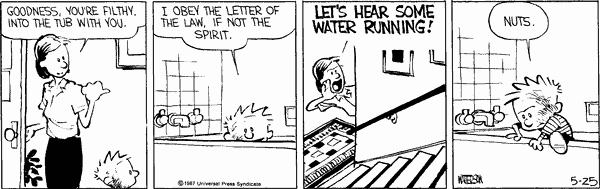
calvin

I don’t know about you, but I’m tired of joyless Bible studies. I’m wearied of conversations that are devoid of the thankfulness and gladness. These are not fleeting sentiments, but core conditions that should reside at the center of our lives no matter how bad things may seem in our world. I’m sick of reading the angry political rants and mean-spirited opinion pieces that litter my friends’ social media profiles. If the joy of your salvation cannot stand up to the rancor of our age, I have to question whether you’ve ever really experienced that joy at all.

This life is hard, and the people of God must walk a fine line between our convictions and our humility. But it is not enough to smile only every once in a while, or to only lift our hands in praise for a few minutes once a week. The way of Jesus is a way of love over hate, peace over division, patience in affliction, and joy amidst suffering.

May we remember this not merely for the sake of our own troubled spirits, but also for all the hurting souls in whose midst God has placed us.

Why We Don’t Talk Anymore

We’ve come to that moment yet again.

The perpetual, politicized discourse that abides within our social media feeds, among our back porch conversations, and somewhere between our half-empty coffee mugs at the local breakfast spot is now poised to flare up once again with what has, unfortunately, become an all-too-frequent set of talking points. I’m referring, of course, to the interconnected debate over gun-control, mental illness, racism, and personal liberty. We’re discussing debating arguing feuding over these issues far too often these days. It’s like a Simpsons clip show – it’s showing up more and more, and each one only reminds us that the show has been going downhill for quite some time.

outrage

The ghastly tragedies in El Paso and Dayton that occurred this past weekend have thrown a fresh heaping of salt into our lacerated hearts while simultaneously squirting a fresh helping of lighter fluid on a raging wildfire that continues to burn across America.

On one side of the flames are those who cry out for reform – for this nation to sit down for an intervention that will help us turn away from our addiction to firearms and, at long last, seek help.

On the other side are those who cry out for personal liberty – for this country to distinguish the lonely psychopaths, xenophobic degenerates, and violence-obsessed reprobates who commit these horrible acts from the host of good, upstanding gun-owners and enthusiasts who would never so much as jokingly point an unloaded gun at their buddy.

For all the irrational arguments spewed online and on cable news,  both sides know, deep down, that the other side makes some good points. But the vast majority refuse to ever admit it.

abortion

It’s Not Me, It’s You

Instead, when it comes to issues like gun-control, immigration, abortion, gender identity, and religious equality, we are like a divorced couple whose irreconcilable differences became so acute and traumatic that now even the sight of one another sends us spiraling into an uncontrollable fury of indignation and vindictiveness. We do not bear a shred of trust for one another, and we have plenty of past interactions to point to as reasons why.

But what makes this separation even worse is the fact that, at one time, we were united. We had our disagreements, but there was a period where we were relatively successful at living with those differences. However, as we gradually settled deeper into our preferred ideologies, the relationship was strained. We went from appreciating one another, to tolerating one another, to waking up one morning and loathing the one next to us. There were feelings of betrayal on both sides – a lack of fidelity, a chasing after other interests and pleasures that turned the crack between us into a gaping chasm. (By the way, for those of us who do not feel we belong to either “side,” it is abundantly clear we have become children of divorce. Do not think by not aligning ourselves with one side or another that we will make it through this bitter split unscathed.)

rally

We don’t know how to talk to one another anymore. We’ve lost the capacity to listen all the way through without interjecting. We are bottle rockets of emotion and our fuses have been clipped dangerously short. Before we can recuperate from the problems at hand, we need rehabilitation of discourse. Such a reconditioning cannot be found in the pages of sociology books, or accomplished in the twenty-second soundbites of presidential candidates. And it certainly can’t be achieved through a small town pastor’s blog.

Until we’re ready to sit in the same room together, to rediscover the common aspirations that once bound us (and still can), to resist the urge to shame one another’s viewpoints like we’re blocking shots in the NBA Finals, and to patiently hear each other out, then we should not be surprised at the lack of civility in our politics, not to mention our social media feeds. We shouldn’t gasp when leaders feign ignorance about racially-charged rhetoric rather than condemning it because they don’t want to sound like the other side. We shouldn’t be shocked at the rise of extremist ideas and behaviors from either side. We shouldn’t scratch our heads at those pundits, politicians, and preachers who would have us believe that only one side is right about every issue. And when this deep-seated stubbornness gives birth to suffering and violence, we should not be surprised. When you form a snowball and send it rolling down a slippery slope, do you ever really expect it to stop midway?

protestor fight

Where Have All the Prophets Gone?

As a pastor, I am finding it more and more difficult to speak into these issues. I have not the intuition nor the energy to share anything of substance – at least anything that actually seems to make a difference. Joy is a commodity in short supply, and the standard for contentment is pathetically low. It has gotten to the point where, if I meet a fellow minister over breakfast or coffee and they don’t regurgitate the talking points of one side (usually assuming I will automatically agree with them), I’m relieved. Perhaps it’s my own proclivity for the dramatic, but there are times when I cannot help but feel like the prophet Jeremiah, tasked with pronouncing the will of the Lord to a people who were absolutely convinced they were in the right and he was just a street-corner kook.

This is what the Lord Almighty, the God of Israel, says: Reform your ways and your actions, and I will let you live in this place. Do not trust in deceptive words and say, “This is the temple of the Lord, the temple of the Lord, the temple of the Lord!” If you really change your ways and your actions and deal with each other justly, if you do not oppress the foreigner, the fatherless or the widow and do not shed innocent blood in this place, and if you do not follow other gods to your own harm, then I will let you live in this place, in the land I gave your ancestors forever and ever. But look, you are trusting in deceptive words that are worthless.

Jeremiah 7:3-8, NIV

Even as I read these words, in my mind the counterarguments of both sides open their lips and raise their voices. Yeah, well, they’re the ones who are speaking deceptive words. I’m trying to change our actions, but they’re not listening. Whatever innocent blood is shed has nothing to do with me! Why don’t you talk to them about that? I’m trying to be part of the solution, not the problem. And by the way, if these foreigners would just come in legally, I wouldn’t have to “oppress” them…

Our confidence in the merits of our own side will be our undoing. Our refusal to establish common ground has resulted in an insurmountable chasm. It even seems like anyone who attempts to build a bridge between the two must endure sniper-fire from both ends. To be clear, as noble a task as it seems, I am not that bridge builder – I’m too afraid of the bullets.

cartoon bridge

The Narrow Road to Unity

The only hope I find is in the one person who wasn’t afraid (or, at least, he didn’t give in to his fear). He knew the work of unity – of uncovering a bond that runs deeper than the most divisive of ideological disagreements – was worth being doubted, rejected, and ridiculed. He knew it was worth dying for. And he was certain that death awaited, that there really was no way to avoid it if he continued down the treacherous, rocky path of reconciliation.

I wonder what he thought when he called his traveling companions to join him on that journey. Those twelve men who formed his inner-circle. Certainly it was no oversight, no miscalculation on his part, that one was a tax-collecting traitor to his countrymen, and another was a Zealot who believed all traitors should be purged in a violent, bloody overthrow of the status quo. What were those fireside conversations like? How could Levi and Simon even stand to be in the same room with one another, let alone not erupt into fisticuffs seconds into any conversation?

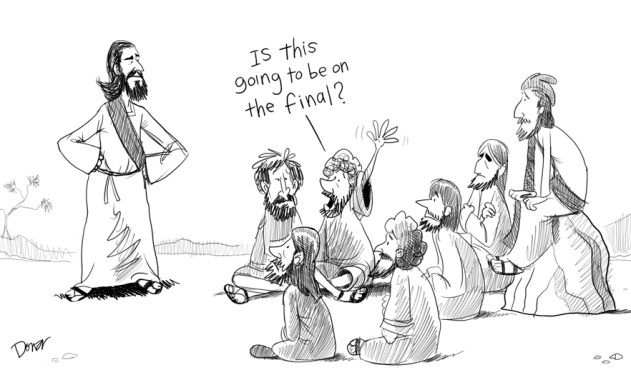
jesus_final

There must have been something far more compelling than their own self-righteousness that held their attention. Someone who did not dismiss the ideas that separated them, but instead graciously offered to help both men transcend their differences  – to be transformed in the narrow way of unity rather than trampled underfoot on the thoroughfare of fearful discord.

Anyone who could get those two to not only tolerate one another, but to ultimately work together in the end… Let’s just say, we would do well to shut our mouths and listen to someone like that.

A Higher Allegiance

This Sunday marks one of those uniquely complicated situations a majority of pastors and worship leaders – at least those in America – face each year.

Memorial Day is an important day in our country’s calendar. On this day, we commemorate the sacrifice of the men and women in the United States Armed Forces who have perished in the midst of their service. It is a solemn day of remembrance for a reality that is all too present in our world. As much as the pundits and politicians may prattle about patriotic ideals of freedom and peace, Memorial Day is nonetheless a reminder that violence grows like a cancer on the human race. It seems the nations of the world cannot keep from locking their horns from time to time, not to mention, in the intervening seasons, sharpening, preening, and polishing for the next challenger.

elk_16x9

Come at me, bro.

Because Memorial Day falls on a Monday, the preceding Sunday worship service must not only be planned in light of the expectation that a significant portion of congregants will be absent due to the long weekend’s festivities (the lake’s not going to water ski itself), but also with regard to how much of this nationwide moment of remembrance should be present within the public liturgy of Sunday’s worship. The latter, of course, is the complicated part.

The worship of the Church is ultimately singular in its focus. It’s about God. A key expression of the soul’s response to the generous omnipotency of God the Father, the world-changing gospel of Jesus the Son, and the mysterious indwelling of the Holy Spirit is an outpouring of adoration, thanksgiving, confession, and celebration. Congregational worship is when our individual outpourings are united together in what we call “the communion of saints.” It’s the Voltron of Christian devotion – individual worship is powerful, but corporate worship is extraordinary.

history_classicvoltron

PICTURED: 1 Corinthians 12:12

Each week, I sit down with my church’s worship leaders to carefully craft that Sunday’s order of service. While I truly believe preaching to be an art form – that preparing, writing, and delivering a sermon is a uniquely creative act that warrants both individual talent and exhaustive practice – the same can be argued for the planning of a worship service. Constructing a service of congregational worship – painstakingly considering its various movements and individual elements – is not unlike composing a poem. Each line matters. Each word, even. No piece is included without reason No part should be phoned in. The songs spur the prayers, which reflect the salvific message of the Scriptures, which are expounded upon in the sermon, and responded to before the table and altar. And what is this poem about? What is its theme? What is the primary focus?

God.

Always, only God.

Which brings me back to the awkward complications of the pre-Memorial Day worship service. So solemn and respectful is the nature of this day and its prescribed observance that it seems insensitive and heartless for the local church to ignore it within its corporate worship. After all, Memorial Day is, at its core, an acknowledgment of the tragedy of death and the veneration of sacrifice for a cause far greater than oneself. It is a secular observance, yes, born out of the inherent rage of nations and cultures. But if the gathered local church cannot or will not speak to such a moment, I have to question its continued relevance to society in general.

Despite what many professing Christians (as well as some of those same pundits and politicians) may claim, America is not a Christian nation. It is a pluralist nation. The Constitution was crafted under the belief that while the moral teachings of the Judeo-Christian expressions of faith were largely good for civic order and lawfulness, religious exclusivity was not. As such, the founding fathers who were Christians did not seek to legislate their faith any more than the founding fathers who were deists, or atheists, did. So, while the words “separation of Church and state” do not appear in its lines (but rather in a letter written by Thomas Jefferson to the Danbury Baptist Association in 1802), the first words of the First Amendment to the Constitution certify the necessary separation of these two entities. This is a good thing. Politicking aside, America bears no national religion. There is no state church. (We take oaths on Bibles, yes, despite the fact that Jesus himself warned us not to do that.)

inauguration-bible

From the look of it, you’d think we only had one of these.

I know some colleagues who refuse to acknowledge Memorial Day, Independence Day, or any other secular American observance within their churches. Their reasoning is that it contradicts the theological focus of worship, and dangerously blurs the demarcating line that must run between the Church and the state. I have other friends who are pacifists, some who hail from denominational traditions that uphold pacifism as a tenet of Christian discipline; to them, taking a moment to honor those who have willingly stepped away from such an ideal smacks of hypocrisy. It is not that they aren’t thankful for soldiers who defend their country – it is simply that a worship service is meant to be an outpouring of thanks to God, not to man.

And yet, for the gathered church to turn blind eyes and deaf ears to a nationally recognized moment of remembrance for those who have laid down their lives… well, it just feels wrong. Even if the cause for which these men and women have given their lives is not a godly one, God is indeed present in ungodly places and situations. He is on the bases and carriers, in the O.P.s, Humvees, and cockpits, and surrounding the war-torn communities caught in the middle. War may be hell, but God does not wince at the sight of it.

For pastors seeking to point people to the glory of God and the matchless wonder of his holy kingdom – to assist congregants in lifting their heads above the brambled treeline of this violent world in order to behold the Truth that transcends our man-made darknesses – these moments in the year where our lesser, nationalistic identity points weigh heavy on our minds presents a dilemma. Vice President Mike Pence famously said, “I’m a Christian, a conservative, and a Republican, in that order.” I respect that. However, if he is indeed a Christian “first,” then he understands that one’s Christian identity does not always run congruent with the other two. To assume it does is to water down one’s faith in order to make it more palatable for our earthly pursuits and preferences.

293884104_5044363032001_5044350690001-vs

“… a Hoosier fourth, a tenor fifth, a CostCo Club Member sixth, a Belieber seventh… let’s see, what else?”

Hence the complications in planning a worship service that acknowledges Memorial Day, but does not equate its observance with true Christian worship. It is a dilemma not easily addressed or answered. Is there a way to respectfully acknowledge the kingdom of man while engaged in worship of the Kingdom of God? Is there room in our worship for commemorating those who have fallen in defense of the former? After all, while Jesus ordered Peter to sheath his sword, neither did he blame the man for wanting to draw it in the first place.

Here is what I know. I know that a Christian is one who has pledged himself or herself to a higher allegiance. I know that, ultimately, we live not in hope of a more orderly and sensible earthly kingdom, but in hope of a divine kingdom fully consummated on earth as it is in heaven. I know, also, that this hope must not detach or remove us from the present concerns of society. I know we must engage this world as it is, not only as we believe it should be/will be. I know that worshipping communities must not ignore the harsh realities of our day, but rather sow seeds of peace at every opportunity. Church and state may be separate in America, but this is no justification for Christians to divorce themselves from the world, even as we await a better one.

The Fullness and the Emptiness of Ritual

When I think back on the worship experiences of my youth, specifically those that took place in the little Baptist church I attended with my parents, I can picture a lot of meaningful moments. I recall the way the pews creaked beneath the weight of the parishioners, the trembling warble of the organ during communion, and the sound of congregational hymns belted out loudly in that diminutive sanctuary, the old men loudly grumbling, “Hasten so glad and free-ee-ee!” while the rest of us sang the melody. When I think of all these things, I smile. For the most part, my church upbringing was a good one. I’m aware not everyone can claim this, of course, so I am exceedingly grateful that I can.

ChurchSign

Yeah, this place doesn’t exist.

And yet, there are some things that I can’t remember, not because my memory has been clouded by the density of years, but because the memories simply do not exist. For all the pleasant aspects of that worshipping community who molded me, there were some important elements nonetheless missing from my experience.

For instance, I can’t remember candles in the sanctuary, aside from those stubby ones we used on Christmas Eve – not a single wick burning in a votive or candelabra on any Sunday of year. Neither do I remember the aroma of incense ever filling the room. I have no recollection of a soaked rag on my bare feet, or a thumb tracing a gritty line of ashes upon my forehead. And I can’t even remember a moment of silence – an intentional one, that is, as opposed to those fleeting, quiet moments spent waiting  for an usher to climb the stage to give the offertory prayer.

I can’t remember going to a Good Friday service. I do not recall participating in a Maundy Thursday observance. And it wasn’t until graduate school that I dared set foot in an Ash Wednesday service.

Now, it’s not that these worship elements or “holy day” observances were explicitly condemned in my little Baptist church. However, as far back as I can recall, none of them were sanctioned either. (We did get Fridays off of school back then, along with the Monday after Easter, but I think that had more to do with training workshops for teachers than anything religious.)

When it came to these sensory components, and special worship services, a pervading sentiment existed within the majority of church-goers among whom I grew up that such things were extraneous to true worship. Unnecessary. Some went so far as to imply they were detrimental to our faith, possibly even dangerous.

dad-scolds-his-son-bad-footage-087699334_prevstill

“Pentecost Sunday sounds like it’s for the Pentecostals, boy! You wanna celebrate a feast day, Christmas’ll be here in seven months.”

Just about every person I heard say such things would cite the same reason. They would say things like candles and silence, Ash Wednesdays and Maundy Thursdays, were “empty rituals.” What this meant, it seems, was that such institutions which hailed from past eras and periods of history, if ever they were worthwhile to begin with, were wrung dry of real meaning long ago. This, it seemed, was our community’s predominant holdover from the Reformation, in which Protestant viewpoints challenged the 1000+-year teachings of the Roman-Catholic Church: the numerous conventions, traditions, and customs established during those years were just desolate echoes of significant spiritual devotion. They didn’t – couldn’t – mean anything anymore. They were bankrupt of any eternal weight.

That same sentiment acidified the conceptions and sharpened the tones many of my fellow church-goers held toward other denominations, too. Whenever talk turned to another congregation’s worship, especially those considered more “high church” (translation: different than our own), their brows would furrow with ever-increasing concern. The Lutherans and Methodists down the street were fine… I guess. The Church of Christ folks were tolerable, sure, but they probably needed to get over that whole no-instruments-in-worship gaffe. The Presbyterians a few blocks away were troubling, what with all their sitting, standing, and responsive readings. Then there were the Episcopals who gathered a half-mile further down the road – they were as disturbing as their church building’s maverick architecture. And as for the Catholics on the other side of town, well, how could anyone really worship “in spirit and truth” with the stench of sulphur and brimstone stinking up the place?

Don’t get me wrong. I am deeply thankful for the Reformation, for the courageous and brilliant teachings of men like Luther, Calvin, Zwingli, Knox, Cranmer, Melanchthon, and Simons. And I think in some ways their critiques of worship – differing from one another as they might have been – were necessary indictments of a system that, in a variety of ways, had become sacramentalized into triviality (that is, over-ritualized to the point of folk superstition). Indeed, the Western Church was long overdue for a thorough spring cleaning, and Protestant theology and ecclesiology was the steel wool to the Holy Roman Empire’s tarnishes.

But in the righteous fervor many denominational traditions  have exhibited over the last four-to-five centuries to “do church” the right way – free of the constraints of a once-corrupt and power-drunk system – we made the tragic mistake of throwing innocent babies out with the sullied bath water. In other words, rather than carefully demarcating ourselves only from the specific beliefs and policies we found wanting, instead we gathered up everything bearing even a whiff of the other side and chucked it atop the trash heap. So it was that numerous disciplines, practices, and devotional observances, which continue to bear eternal significance, are often nowhere to be found in many “evangelical” churches today. We considered sensory disciplines like silence, visio divina and centering prayer too mystical, liturgical feasts like Epiphany, Annunciation, and Christ the King too obscure, and symbology like ashes, incense, and iconography too esoteric. Generation after generation of Protestant and evangelical pastors decided against teaching how these diverse elements offered deeper perspectives and unique pictures of the mystery of Christ. Instead, we chocked them up to being less effective communicators of the gospel than our preferred worship elements like baptistries and choir lofts, or church observances like sunrise services and Christmas Eve candlelights.

Gluten-free-Prefilled-Communion-kit-nutrition-facts

How did folks get by without these back in the Middle Ages?

It’s a shame, really. Because, when freed from the chains of rote tradition, these less modern forms of worship still sing with substantial beauty and depth. Baptists are certainly among the “low church” traditions who, over the years, have tenaciously avoided any activities or practices that looked, sounded, felt, smelled, or tasted Catholic (which more often than not is simply our catch-all synonym for any “mystical,” “obscure,” and “esoteric” worship experiences). And while there may indeed have been some healthy reasons for this kind of distancing a couple hundred years ago, those reasons are head-scratchingly flimsy today.

Because here’s the thing about “empty ritual” – the ritual itself does not choose to become vacant. It is the flesh-and-blood worshippers who, year after year, generation after generation, misuse ritual. We are the ones who drain our rituals of their original meanings, because we have the instinctual, bad habit of taking our eyes off the marvelous views they offer.

It is not unlike living in a small, remote cottage by the sea. When you first move in, you pull your best chair up to the wide rear window and, with a steaming mug of coffee in your hand, sit down each morning to gaze out at the gorgeous scene, and watch the waves tumbling into shore, the cormorants spiraling in the dawning sky, and the sun gilding the surface of the water as it climbs atop the horizon.

But, the longer you reside in the cottage, you cannot help growing used to all this. That ocean view becomes more and more normal and common. Little household responsibilities begin to draw your attention. There are house plants to water, dishes to wash, clothes to hang on the line, not to mention an ever-increasing Netflix queue beckoning you from the other room.

remote-ireland

What? Did you think you could really survive out here without an Internet connection?

Now, you’re not so callous that you would ignore the view altogether. After all, that is what makes this little cottage so special to begin with. But the demands and distractions of life bear no respect for morning meditations in front of that window, and after a while not only are you pouring a smaller amount of coffee and spending less time in the chair, but the time you are putting in is no longer coming from a place of inward captivation, but outward obligation. The view from the window never changes, but your reverence for it does. It becomes, in your mind, merely a holdover from earlier days in the house, something devoid of power, even though it is you who no longer submits to its power.

More often than not, this is what becomes of ritual in the Church. Some hold onto it tenaciously even as they lose their own reverence for it, while others reject it outright because they have been told there is no power – no truth – in it. Not anymore, at least. But that is not the case! These disciplines, observances, and symbols established in ancient days by our great cloud of witnesses never lost their power. No, the problem lies with us modern worshippers. We just got lazy, or we got overcritical, or both.

Here’s the kicker: I’m writing this not as an intellectual observation, but out of my own experience of (re)discovery of these ancient, often maligned, practices.

I spent several of my initial years in the ministry searching for a fresh, genuine experience in the faith. I went to a plethora of conferences and festivals, visited churches who promoted and boasted the latest in modern worship methods and styles. I read book after book by pastors and evangelists trying to “repaint” the Christian life in vibrant, innovative terminologies and metaphors. I bounced from worship service to worship service in search of a new, restorative buzz.

But I came up empty.

Then came a single spring in which I unintentionally wandered into experience after experience of ancient, historical worship practices. Out of rebellious curiosity I sat in on an Ash Wednesday service. I read a book about how to pray the Liturgy of the Hours. I explored the Revised Common Lectionary and the Book of Common Prayer for the first time. I even took a week-long field trip to a Benedictine monastery. All of these things would have found most of the members of my small town church furrowing their brow and shaking their heads. I could even hear some of their concerned voices in my head. “Be careful,” they warned. “That stuff looks kind of Catholic-y.”

Monks working L_tcm4-561503

“They grow their own food?! Looks kind of Communist-y, too.”

Maybe it was. Silence, fasting, and lectio divina are certainly mystical experiences, but that is only because each one is a door into the endless, overarching mystery of the praying life. Anyone who says prayer does not hold a mystical quality should rethink what, at its core, prayer is.

Ash Wednesday, Pentecost Sunday, and All Saints Day were shockingly foreign to my view of what a worship service should look like, but, then again, my view of what a worship service looked like had been the very thing that left me feeling dry. My biggest adjustment to worship style, at that time, was trading three hymns for three praise-and-worship choruses.

And, it turned out, the Benedictines did exactly what I had always imagined monks do, and yet my conversations with them revealed that not only were they otherwise completely normal people, but their own sense of faith and devotion to God was radiant. Evangelicals can say what they want about Catholics, I suppose, but until you spend some quality time with them, you speak more from ignorance than understanding.

So it was that I learned life-renewing lessons that have shaped the way I teach and minister in churches ever since. When it comes to our modern culture’s seeming obsession with the “next big thing,” Christians need not always follow. Sometimes, it’s better to hark back than to leap forward. While the Church must indeed engage and interact with the trappings of modernity, ours is a wealth of fascinating, captivating, and entralling practices and traditions that, while tragically ignored by many believers, still possess untold significance, which the Holy Spirit can and will use to strengthen our faith and sanctify our souls.

The view from the window never changes. The same sea laps the shore, the same birds dance at dawn, and that same sun rises just as glorious as ever. So let us not neglect such undeserved grace. Let us instead dust off and straighten the chair, brew a full pot of joe, and settle in for a fresh gaze upon an age-old view.

Should Christians Celebrate Halloween?

I’ll be honest right up front. I like Halloween. I like the costumes. I like most of the decorations. I like the tradition of trick-or-treating. I like seeing the excitement on my children’s faces, in part because it feeds an abiding nostalgia I feel for the holiday. I like judging candy quality with them, teaching them why a Fun-Size Snickers is better than a miniature 3 Musketeers, and watching with the same sense of anticipation as they open a miniature Starburst two-pack in hopes of scoring a pink or red (rather than the dreaded double-yellow).

I like walking neighborhood streets where neighbors actually speak socially and kindly with one another. I like fire pits set up in driveways and the smell of woodsmoke and burning leaves. I like the short-lived season of autumn, and I like to celebrate the fall harvest in spite of the fact that, not being a farmer, I do not actually participate in any harvesting activities.

corn

Fun gimmick, or lazy farmer?

I’m not ashamed to admit that I even like staying up late and watching scary movies. I’m not a fan of gore and ultra-violent horror flicks, but I do appreciate a good haunted house or monster movie, especially on Halloween.

So, a question like, “Should Christians celebrate Halloween?” strikes a major blow to what has become for me one of the most pleasant times of the entire year. At the same time, I completely understand the question, and the concern that lies behind it. It is a valid concern indeed, and one worth exploring no matter how I feel about the holiday.

Hallowing the Saints

Answering the question, “Should Christians celebrate Halloween?” requires at least some level of understanding of the holiday’s origins. And understanding the origins of Halloween needs to start with that word: “holiday.” The word derives from “holy day,” as in a special day of observance in the Christian liturgical year.

Now, for many Christians – including a growing number of evangelicals – the Christian year is a mostly foreign concept, save for a few holy days that have not faded from regular liturgical observance, such as Christmas, Palm Sunday, and Easter. Many modern-day Christians who make much of those holy “feast” days still may wrinkle their noses at others, like Epiphany, Transfiguration Sunday, and the feast of All Saints’, which is also known as All Hallows Day.

cards

Is there a Hallmark Card for “Happy Presentation of the Lord in the Temple Day”?

All Saints’ Day in particular is a big deal in several denominational traditions, including Roman-Catholics, Anglicans, and some Lutherans, but you may also encounter church communities from other traditions who observe the feast as well. All Saints’ is a day set aside to honor all the saints and martyrs who have contributed to the perseverance of the Church through the ages, including those individuals who have not been venerated or canonized. For many years, the Catholic Church offered Plenary indulgences for participation in All Saints’ Day practices, which included visiting church graveyards, lighting candles, and praying for (and to) those heroes of the faith who had passed away. The point of All Saints’ was for Christians to hallow the deaths of these faithful brothers and sisters, and express gratitude for the sacrificial lives they lived. It is similar to the American tradition of Memorial Day, albeit with a far greater spiritual weight.

Now, inherent to the traditions of these holy days was the keeping of a prepatory vigil the evening prior to the feast day. Worshippers would offer prayers or gather for worship in anticipation of the special commemoration taking place on the following day. Christmas Eve is perhaps the best known example, but there is also Shrove Tuesday, which traditionally precedes the holy day of repentance and fasting known as Ash Wednesday. On Shrove Tuesday, worshippers were supposed to clear their homes of flour and other goods in preparation for the Lenten fast. It is sometimes referred to as “Fat” Tuesday, due to the baking of cakes and other goods in order to use up all the flour. If you’ve ever had a Mardi Gras king cake, you’re eating one culture’s time-honored product of this practice.

king cake

Ah, the long-established religious custom of choking on a plastic baby.

All this is to explain where Halloween gets its name. Over time, All Hallows Evening (i.e., the day preceding All Saints’) became “Hallows Evening,” which was shortened to “Hallows E’en,” which ended up as “Halloween.” Simple enough, really. However, it is not so much the name, but rather Halloween’s alleged origin, that unnerves a lot of believers.

Samhain, Pope Gregory, and Those Kooky Celts

Around the turn of the seventh century A.D., Pope Boniface IV commemorated St. Mary and the martyrs on May 13, alongside the rededication of the Pantheon in Rome. This also happened to be the same day as the Feast of Lemuria, an ancient Roman festival that focused on dispelling the evil spirits and ghosts of the dead. This is one example among many of the Christian Church re-appropriating pagan festivals and practices according to its theology. Some people today scoff at this concept; they are often the same people who can’t resist explaining that Christmas Day is totally not Christian at all but was actually the Roman holiday, Sol Invictus, a pagan sun god festival and so there what do you think about that, huh? I’ve found that rather than arguing with these people, it’s best to just smile and nod and let them enjoy the endorphine rush that comes from feeling smarter than everyone around them.

The truth is, whether or not some people today find the practice disingenuous, one of the key ways Christianity was spread across continents, Europe in particular, was through the “Christianization” of certain cultural holidays and festivals and the theologizing of annual observances. In the midst of their assimilation into the Christian faith, the Church would encourage (or, yes, force) pagan people to re-appropriate their spiritual beliefs according to a more biblical interpretation. That, or they would completely overhaul a holiday or spiritual ideology according to a new, Christological significance. This is one of the main reasons why, in the ninth century, Pope Gregory IV officially adjusted the hallowing of the saints and martyrs to November 1. For many regions of Europe, this date roughly marked the end of the harvest season and the beginning of winter, in which the days grew shorter, the nights stretched longer, and nature began its annual time of death. Leaves turned and fell. Fields sat in fallow furrows. The cold set in, eventually blanketing the world in a frigid blankness.

For the Celts, as well as several other nordic and Germanic people, this time of year was not only deeply symbolic of death and quiet remembrance. They also saw a liminal quality in this shriveling of the environment – that is, they held a belief that whatever unseen veil lay between the land of the living and the realm of the dead was at its thinnest during these cold, dark months. Back then, humans perceived the realm of death with greater reverence and disquiet than we often do today, and, like a sieve, death could sometimes leak through into the land of the living, or so they believed. The Gaelic festival of Samhain, one of four seasonal festivals, included many traditions that nurtured this idea, including the practice of “guising” to hide from those members of the Aos Sí (i.e., fairies, or nature spirits) who may have crossed over into the land of the living with more mischievous or malevolent agendas. Additionally, Samhain included the lighting of bonfires and other harvest-related activities, but, yes, there were also occasions for divination, which makes sense when you remember that the prevailing belief of most people was that this was the one brief time each year when you might truly encounter, or interact with, the spirits of the dead.

coco

If you lived in Mexico, your dog might turn out to be your rainbow-colored spirit animal. How cool is that?

To our post-Enlightenment, Western culture minds, it is easy to dismiss this belief as the dim bulb fantasies of uneducated barbarians. These days, we place our trust as securely with science and reason as the people of these so-called “Dark Ages” deposited their trust and daily conduct into a vast, enigmatic supernatural reality that, as far as they understood it, extended far above, below, and beyond their own. And yet, even if we are intellectually smarter than the people of that time, does that necessarily make us wiser than they?

Christians and the Spiritual Realm

Unfortunately, much of what many Christians believe about spiritual beings and the unseen, “supernatural” realm is based as much in pop-cultural renderings of these old traditions as they are in anything the Bible really has to communicate on the subject. And, in truth, the Bible is actually quite thin on information regarding the spiritual realm. References abound, but details are quite scarce. There are some standout stories, of course, such as King Saul visiting a witch to summon the spirit of Samuel (1 Samuel 28), Elisha being surrounded by supernatural chariots of fire (2 Kings 6), or Jesus encountering a man possessed by a legion of demonic powers (Mark 5).

For each story containing ambiguous pictures of a spiritual reality, there is never a shortage of interpretations. Some lean into what is presented, and they subsequently build an entire angelic-demonic hierarchical worldview based on these fleeting glimpses. Others, though, lean away from literal explanations and instead posit ideas like lucid dreaming or demon-possession as a pre-Enlightenment explanation for schizophrenia or manic disorders, nothing more.

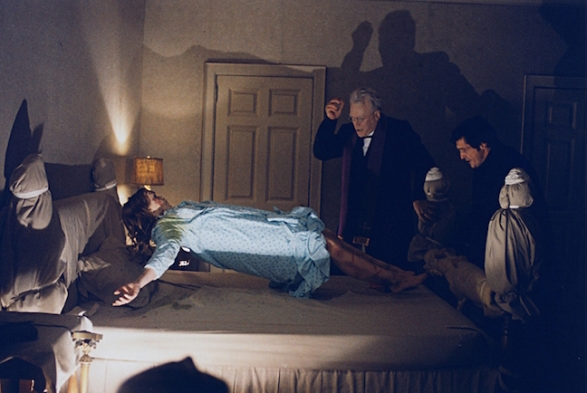
exorcist

“The power of Christ compels you… to please take this Clozapine prescription.”

Say what you want about the tactics of the Holy Roman Church, but by Christianizing these holidays that bore deep spiritual significance, they forced pagan people to contend with a brand new element within the accepted realm of the supernatural: an all-powerful Creator God who has freely bestowed his power and authority unto his resurrected and ascended son, Jesus. The key word there is power. After all, when it came to the practices of divination or conjuring of the spirits, the two biggest motivators were security and power. People either wanted to ensure safety or protection from that which they could not control, or they wanted to gain control over that which they could not control.

For Christian monks, priests, and missionaries, the gospel message was best understood and expressed as a story of God’s power infiltrating and overwhelming the powers of evil both within and beyond our existence. It was a story of rescue not merely from sinful guilt, but of bondage to the malevolent whims of a nefarious, multi-faceted evil power at work in our world. The death and resurrection of Jesus signified the defeat of these dark, worldly powers, and summoned believers to posture their lives according to his truth and his ways. Whether or not the Holy Roman Church always exhibited this truth and those ways properly and graciously… hint: they didn’t… is beside the point.

Halloween, as we know it today, is indeed born of both light and darkness. Christianity and European paganism collided again and again, over several centuries, and eventually produced the hodgepodge offspring of beliefs, traditions, and activities recognized and accepted in our modern, Western society. Yes, there are elements of the holiday that bear a less than seemly origin, and the way some observers enjoy playing fast and loose with the concepts of ghosts, evil spirits, and “contacting” the dead is worrisome. Christians, after all, should recognize that such stuff is not mere child’s play.

And yet, there is much we as Christians can learn about Halloween. Much about how the Church – and, in particular, individual believers – should not fear the culture in which we find ourselves, nor the bulk of its well-meaning practices, even if such traditions are ultimately ignorant of the gospel. It’s been said that Christians should never blame the dark for being dark, but rather live as a composed, confident, and compassionate light shining in the midst of that darkness.

adam

But, you know, let’s avoid embarrassing ourselves with overtly biblical costumes like this.

So, tomorrow I will walk the neighborhood streets and speak and laugh with neighbors. I will bless little children by complimenting their costumes, going so far as to feign fright at some. I will smile at creative jack o’lanterns, vigilantly search for the good Starbursts in my kids’ candy buckets, and breathe in the cool, autumn air that reminds me, even in its pleasantness, that life is fleeting.

I will be a bold and confident rock for my children. If and when they see something that unnerves them, I will assure them that while there are indeed things in this world that are frightening, we have placed our trust in a Power that has overcome the world. His is a far greater, and far kinder, power than any even the darkest of forces can conjure against us.

I know this, not only because the Bible says it, but because there have been those dear saints, unknown but not forgotten, who told me so as well. This Power reigns in my heart in part because of the lives those dearly departed ones lived before me, and the sacrifices of faith they left behind.

May the Lord of all creation bless, keep, and hallow each one of them.

The Face in the Mirror

I just spent the last month telling people they were sinners.

It didn’t come across that blunt, of course. At least, I certainly hope it didn’t. But that was indeed the truth at the core of the four-week class I taught in my church’s annual Summer Institute, a two-month season in which our regular Sunday morning classes take a break and our staff offers a handful of specialized courses not usually on the Sunday School menu. Downstairs, my colleague Allen educated roughly one hundred folks on the history of the Bible’s composition and translation while a large carafe of coffee percolated in the corner. Across the hall, a trio of associate pastors took turns leading discussion with four dozen parents about strategies for effectively rearing one’s children in an often tumultuous culture. And in D-311/312/313, the old classroom partitions were accordioned away in order to accommodate fifty people who, for whatever reason, were willing to come hear me talk to them about their bad habits and psychological hang-ups.

Oh, the strange activities we Christians involve ourselves in on Sunday mornings…

doughnuts

The doughnuts help.

Mine was an ambitious class. I knew that going in. In only four 50-minute sessions, my objective was to not only present a particular hermeneutic on Romans 7 and the spoiling influence of “the flesh,” but also to discuss a variety of teachings on the process of sanctification – that is, how we lowly sinners can actually become more like Christ by way of the Holy Spirit’s influence and transforming work in our inner life. I endeavored to talk about the Desert Fathers’ teachings on spiritual disciplines, the oft misunderstood “seven deadly sins” in Church doctrine, the threefold path of prayer and reflection, and, most directly, the Enneagram system of personality – a tool of spiritual direction that has helped me better understand the root fixations and self-preserving inclinations in my own life. So, yes, I might have been biting off more than I could chew with this course.

Nevertheless, it went as well as a pastor can hope when speaking specifically about sin for the better part of an hour for four straight weeks. But even from the very beginning of our first session, I experienced a pair of sobering realizations that stuck with me throughout the course, and have continued to chime in the back of my mind in the days since the class wrapped.

The first realization was that, for all the many Bible lessons I have taught in my (has it really been?) eighteen-year ministry career, and all the sermons I have preached, and all the panels I have sat on offering far larger sums than a mere two cents can buy, rarely have I found myself speaking explicitly about sin – the human struggle with it, and the Christian’s continual struggle against it. Oh, sure, the concept of sin – the reminder of it – is always there, darkening the edges of my lessons like an integral plot point in a film or novel you mustn’t forget about if the ending is going to make any sense.

I am a pastor who delights in speaking of the love of God and the atoning work of Jesus on the cross, but I am not so ensorcelled by this truth that I have completely done away with references to the effects of sin – its invasive influences and erosive effects. It does not escape me or the messages I preach that we live in a fallen world, that we are broken people in need of mending, and that it is somehow both necessary and futile to resist temptation. We are a people who stand in need, everyday, of salvation.

But aside from the occasional passage of Scripture that requires I address the issue of sin, as I dove into this latest lesson series I realized that my usual modus operandi is merely to dance around the idea of sin rather than look it full in the face. After all, nothing puts a damper on an enjoyable Bible study excursion than a self-selected detour through the swampy thicket of human wretchedness.

brussel sprouts

If Bible studies were family dinners, teaching about sin would be the Brussel sprouts of the meal.

The second realization was that I am not alone in limiting my use of the ‘S’ word in my lessons. I cannot speak for all churches, of course, but I get the feeling that aside from a few denominational traditions out there that are customarily fixated on iniquitousness, the majority of Christians in the West are not well-versed in the specifics of the biblical witness regarding sin. This is not because we deny the problem of sin, but because we would rather hold it in our minds in a vague and generalized way, and then move right on past to the bits about love and salvation and faithfulness and a grace that is greater than all our sin.

And that’s understandable. The more sin can be that faceless, nebulous villain threatening the entire collected populace, the better we can function within the reality of its constant influence on our lives. It is only when I begin to consider just how guilefully and intricately its tentacles have entwined my own soul that I recall just how dire and desperate is this struggle.

Sin does not merely stunt spiritual growth, it creates a crippling drag on every motion in my life. And, worst of all, sin is a mirror that, when I dare to gaze into it, shows me not the face of some sinister outside invader, but myself. It reminds me that I am my own worst enemy.

How-does-a-Man-stop-ageing

And that I look much cooler than I actually am…

The Apostle Paul was willing to look hard at this familiar face in the mirror, and then he conveyed his utter bewilderment with an equally bewildering description:

I do not understand what I do. For what I want to do I do not do, but what I hate I do. And if I do what I do not want to do, I agree that the law is good.  As it is, it is no longer I myself who do it, but it is sin living in me. For I know that good itself does not dwell in me, that is, in my sinful nature. For I have the desire to do what is good, but I cannot carry it out.  For I do not do the good I want to do, but the evil I do not want to do—this I keep on doing. Now if I do what I do not want to do, it is no longer I who do it, but it is sin living in me that does it. (Romans 7:15-20, NIV)

For the devoted Christian, this is the vexing mystery of sin. It is us, but it is also not us. Paul found this dilemma both infuriating and humbling. After all, no one enjoys looking in a mirror if they know something ugly is going to be staring back at them. We would much rather avert our eyes whenever that dark glass hoves into view. A few of us will go so far as to deny the mirror exists at all.

Thus, without noticing it, I had put together a course in which, over the span of four weeks, I forced both myself and the fifty people in the audience, to lock eyes with that gaunt and ghastly figure grinning back at them from their mirrors. And I was reminded of just how important (and yet terribly unpopular) an exercise this is for Christians. In the earlier days of the Church, this practice of constructively contemplating one’s sinfulness was known as mortification of the flesh. As an element of the sanctifying work of the Holy Spirit in a believer’s life, mortification referred to willing meditation on the darkness and death that clings to the soul like June bugs on a T-shirt. It’s objective was the adoption of particular spiritual disciplines (e.g., fasting, chastity, solitary prayer) that would, little by little, purge from our souls the self-centeredness and deeply rooted compulsions which, as the Apostle Paul insisted, continually prevent us from living godly lives.

There is nothing fun about mortification of the flesh. Looking inward to identify our bad habits and behold our crippling wounds, even with the comforting guidance of God’s Spirit, is no picnic. It can be an arduous and uncomfortable process. If we forget the truth that Paul declared in Romans 8 (right on the heels of his personal lament about sin) – that there is no condemnation for those who are in Jesus Christ – we can easily sink into the murky depths of self-loathing and despair.

However, never has the ancient practice of mortification been more necessary than in our modern culture. This is an age in which people will rush to publicly shame someone who has violated or failed others, but will keep a tight-fisted hold on individualistic pride if and whenever their own shortcomings come to light. We have little trouble maligning others, but often refuse to admit our own shame. And while the Christian life is certainly not about shaming sinners – seriously, it is not about shaming sinners – it is absolutely concerned with how people come to identify, accept, and find forgiveness for their sins, which, contrary to popular worldly opinion, is the only way to really move on from them.

love-the-sinner-570x187

And yet, knowing all of this, I still avoid looking in the mirror. As a minister, I too often preach the grace of God without taking the time to ponder its limitless depths. All the while, the masses continue their endless search for alternative, non-messy methods to overcome the rottenness they know lies at the core of their being.

All because we do not want to feel ashamed.

Thomas Merton identified this epidemic of denial in his journals:

“What (besides making lists of the vices of our age) are some of the greatest vices of our age? To begin with, people began to get self-conscious about the fact that their misconducted lives were going to pieces, so instead of ceasing to do the things that made them ashamed and unhappy, they made it a new rule that they must never be ashamed of the things they did. There was to be only one capital sin: to be ashamed. That was how they thought they could solve the problem of sin, by abolishing the term.

Oh, that we would brave the embarrassment and, yes, even the shame of our sin in order to find the way past it. If only we would learn that ignoring the plank in our own eye is responsible for far more disappointments in life than our neighbors’ specks could ever be. If only we would trust in the love and strength of the One who heals us – who called us out of the miserable grip of sin – and, in that source of confidence, level our gaze at the false self staring back at us in our mirrors.

As I told that gathered group of fellow sinners, if we are willing to do this – to bravely and honestly look inward and behold who we truly are – perhaps we will finally be able to see past the grim features and fiendish grin of the old, false self, and behold the truth that lies behind its leering eyes. Perhaps we would recognize the fear hidden beneath that gaze – that the old man in the mirror is dying, his power has been stripped away. He has been rendered nothing more than a fading shadow that now dissipates in the radiant light of the sun of righteousness.

Freedom breaks like the dawn, and, if we really look, within its rays we can indeed see the visage in the mirror slowly but surely being transformed from lowly sinner to soaring saint.

Christ the King

Today is Christ the King Sunday. It is the last day of the Christian Church calendar.

Depending on the tradition of the faith in which you worship, you may or may not observe this particular day. There are a lot of significant days and seasons within the Church year, and almost all denominations observe at least some of them (e.g., Christmas, Good Friday, Easter). If you are Roman Catholic or Greek Orthodox, it is likely your worshipping community follows the Christian calendar very closely, including such focal observances as the Feasts of Epiphany, the Annunciation, and Pentecost, to name merely a few. The same is mostly true for more “high church” traditions like Anglicans, Episcopalians, Presbyterians, and some Methodists, in which it is not out of the norm to participate in special services like Ash Wednesday, Maundy Thursday, and Trinity Sunday.

While it is less common in “low church” circles like the Baptists, Assemblies of God, and the majority of non-denomination communities to observe many aspects of this ancient Christian liturgy, the last decade or so has seen a resurgence of ancient traditions within modern contexts of church worship. Younger generations, including those that did not grow up within liturgically based systems, are beginning to reintegrate an increasing number of observances and practices once considered outdated or traditionalistic.

What makes Christ the King Sunday a valuable component of the Church calendar for all Christians, regardless of denominational tradition, is not simply the fact that it stands as the culminating observance of the whole year (which will begin anew next Sunday with the first week of Advent). It is what the central theme of this “feast” is concerned with, which is the crowning of Jesus Christ, in a devotional sense, as Messiah and ruler over every aspect of our lives. Having anticipated his incarnation during the season of Advent, celebrated his birth throughout the twelve days of Christmas, recognized within the season of his Epiphany the greatness of his mission, the genius of his teaching, and the glory of his wonders, followed him throughout Lent as he set his face toward Jerusalem, mourned his death on Good Friday, glorified him on Resurrection Sunday, and accepted his call to a revolutionary discipleship at Pentecost, we finally arrive at a moment of “completion” (Phil. 1:6) at the Feast of Christ the King.

While a relatively new observance within the liturgical year (it’s current placement on the calendar was established in 1925), I can think of no better way to culminate the Christian year than by crowning my Lord and Savior as king over every part of my life. As Pope Pius XI wrote upon the establishment of this feast day:

“If to Christ our Lord is given all power in heaven and on earth; if all men, purchased by his precious blood, are by a new right subjected to his dominion; if this power embraces all men, it must be clear that not one of our faculties is exempt from his empire. He must reign in our minds, which should assent with perfect submission and firm belief to revealed truths and to the doctrines of Christ. He must reign in our wills, which should obey the laws and precepts of God. He must reign in our hearts, which should spurn natural desires and love God above all things, and cleave to him alone. He must reign in our bodies and in our members, which should serve as instruments for the interior sanctification of our souls, or to use the words of the Apostle Paul, as instruments of justice unto God.”

Or, consider how Frederick Buechner puts this concept of personal Lordship in his memoir, The Sacred Journey, as he recalls the sermon that finally moved him to a point of conversion, delivered by the renowned preacher, George Buttrick:

There came one particular sermon with one particular phrase in it that does not even appear in a transcript of his words… I can only assume that he must have dreamed it up at the last-minute and ad-libbed it and on just such foolish, tenuous, holy threads as that, I suppose, hang the destinies of us all. Jesus Christ refused the crown that Satan offered him in the wilderness, Buttrick said, but he is king nonetheless because again and again he is crowned in the heart of the people who believe in him. And that inward coronation takes place, Buttrick said, “among confession, and tears, and great laughter.” It was the phrase great laughter that did it, did whatever it was that I believe must have been hidden in the doing all the years of my journey up till then. It was not so much that a door opened as that I suddenly found that a door had been open all along which I had only just then stumbled upon.

On Christ the King Sunday, we shed every allegiance that, whether intentionally or not, sets itself up as contrary to the Kingdom of God and its principles. We worship the glory and splendor of the coming King, but we also take a long, sobering look at ourselves and the myriad ways we are so regularly disturbed by, and entangled in, the fleeting, finite affairs of a world that is constantly trying to save itself through its own limited ingenuity.

So, in a day and age when, through both news and social media outlets, we are subjected to the blustering bravado of self-centered, image-obsessed world leaders…

When, in search of a better life, we make the mistake of placing our hope in partisan platforms, legislative moralizing, and the dubious assurances of politicians who are well versed in the dog-whistle buzzwords of various faith-based groups…

When we so frequently trade the timeless spiritual disciplines of formative prayer and Scripture-reading for pop spirituality fads and self-help books that do our study of the Bible for us…

When we stray from the ancient way of humility, compassion, and forgiveness because we buy into a lie that certain people with certain hangups, or particular groups hailing from particularly nasty regions, have in some way crossed a line which allows us to withhold our kindness and leniency…

When we forego the call to bear an honest and persuasive witness to the Way of Jesus and instead give in to the instant satisfaction that comes by way of pithy soundbites and hashtag “prayers”…

Of these things, we repent.

For these things, we ask forgiveness.

From these things, we confess our need for deliverance.

Before the refrains of the Advent hymns and Christmas carols begin anew, we pause today to swear the only allegiance that will endure – to profess faithfulness and obedience to the one true and worthy King. We bow our knees, realizing that this is not only good and right to do, but it is also the very reason we were given knees at all, so they might bend before the perfect authority and unrivaled mercy of the One through whom all things live and move and have their very being.

The Veterans’ Day Lesson I Never Expected

I am the son of a veteran.

My father is a retired Air Force pilot. He flew missions in the Vietnam conflict as well as the Balkans. During Operation Desert Storm, he spoke to an assembly of my entire middle school student body about the reasons for the war and the United State’s objectives in aiding the Kuwaitis. Throughout his career, he flew everything from bombers to F-4 Phantoms to the A-10 Thunderbolt (a.k.a. the “Warthog”). I still remember occasionally looking up to the sky during afternoon soccer practice and seeing that funny-looking, green warplane, with its massive front cannon, gliding across the sky. It would suddenly bank to the side, circle around, and fly over again, this time dipping its wings back and forth. This, I knew, was my father returning to Bergstrom Air Force Base after a trip. He had adjusted his flight-path in order to say a quick hello to his son (while simultaneously solidifying his status, in the eyes of all my teammates, as the coolest dad in the world).

Growing up, I played with models of various airplanes – A-4 Skyhawks, F-14 Tomcats, F-15 Eagles, F-16 Falcons, the list goes on. I watched Top Gun so many times as a kid that to this day I can still quote the final air battle scene in its entirety. And I stood in awe at airshows watching jet pilots scream across the sky performing barrels rolls and synchronized maneuvers. More than anything, though, I loved watching that twin-engine monstrosity roar in low and reduce a targeting shack to a billion exploding splinters of debris.

KctdSNN

Eat your heart out, Tony Stark.

I am exceedingly proud of my father, for his service, for the career he chose, and for what he taught me about discipline, honor, and respect for our country. I do not take it lightly that people like him (not to mention his father and two of my cousins who served in the Marine Corps) have dedicated their lives to protecting this country and its interests. And while I realize not every modern military conflict is directly concerned with our personal freedom, I still recognize that the freedoms we enjoy in this country and the possibility for an even brighter future is what inspires men and women like my father to serve.

I did not choose the line of work my father did. A thousand Top Gun viewings notwithstanding, I was afraid of flying. I still am. I’m also terrible at math, which any jet pilot will tell you is an integral part of the job.

a-10

Not the best place to run out of fuel because you forgot to carry the one.

Instead, I entered another form of service. I dedicated my life to preserving and furthering the freedom of a different kind of country – a freedom, I believe, that is far more precious than even the freedoms we enjoy as Americans. And, on this Veterans’ Day, I recognize that my father’s military service has helped me comprehend a much deeper truth about my own choice of career.

As a pastor, I am tasked with teaching the disciplines of this other country we call the Kingdom of God. It is my job to incite respect and encourage honor for the interests of our Creator and his people. And just as our commander-in-chief, Jesus the Son of God, laid down his life for the sake of every kingdom citizen, so must I be ready and willing to sacrifice my own for the sake of his gospel. This isn’t just a job. It’s a calling. A way of life. And I do not undertake this service merely because I am commanded to, but because, like a good soldier fighting to preserve the interest of the country he loves, I am irrevocably inspired by the freedom I have in Christ, and the promise of a bright, shining future.

Without realizing it, the dedication my father exhibited to his career in the Air Force was at the same time preparing me for my own career in the fields of our Lord. And for that, above everything else, I am abundantly grateful.

So, thank you, Dad, for the discipline, honor, and respect you taught me. Thank you for your sacrifice. Thank you for the missions. Thank you for your life of service.

And thanks for those fly-bys over soccer practice. That was freaking awesome!

Why It’s Okay for Christians to Watch Scary Movies (A Halloween Post)

To the hard of hearing you shout, and for the almost blind you draw large and startling figures. – Flannery O’Connor

The first scary movie I ever watched was Gremlins. I was five years old, and less than five minutes into the second half of the movie – after the furry mogwai balls become cackling, razor-toothed monsters – I wanted nothing more to do with scary movies for the rest of my life.

I know. Gremlins. 

I couldn’t even handle a horror-comedy produced by Steven Spielberg.

spielberg

Behold the face of unbridled terror!

Speaking of Spielberg, you know what else I couldn’t handle? E.T.

Something about that pug-faced, periscope-necked little alien freaked me out. All the moonlit backyard shots, and the foreboding sounds emanating from the family’s shed. Sure, the audience was granted a glimpse of these space creatures from the very beginning, but how was I to know that their flora-gathering interstellar expedition didn’t also include the consumption of human flesh. Maybe that’s why the government was after them in the first place.

The point is, no one had to warn me about scary movies when I was a child. I had gotten a taste of even the tamest examples, and couldn’t handle the emotional tumble that followed. So, while my older sister had slumber parties where she and her friends huddled in the dark watching movies like Poltergeist and A Nightmare on Elm Street, I avoided visual contact with every single brand of movie monster that appeared before my face. I shut my eyes in department stores whenever I saw Spike or Freddy Kruger’s visage emblazoned on a T-shirt. I ran screaming from the room when Lou Ferrigno transformed into the Hulk. Even at the age of ten, I turned down my friend’s invite to sleepover at his house when he excitedly told me his mom had rented Beetlejuice for everybody to watch.

I know. Beetlejuice. 

Now here I am, a month shy of thirty-eight, and I am no longer afraid of Gremlins or Freddy Krueger. A few weeks ago, I even sat down with my seven and five-year old daughters to watch E.T., and I was able to (I think) talk them through their initial misgivings when those same moonlit shots came on the screen, and the creepy scrabbling sounds started up in the shed. (Seriously, though, what kind of dunce is Eliot that he just grabs a flashlight and goes to investigate it alone?)

beetlejuice-2-beetlejuice-goes-hawaiian-photo-u2

Also, did you know at one time Warner Bros. was considering a sequel called Beetlejuice Goes Hawaiian? Now, THAT’S scary.

However, thinking back on my childhood and the hair-trigger cowardice I sported, I’m not embarrassed. After all, shock and fear are instinctual components of the human psyche, and when you are a little kid the world can often seem much bigger, wilder, and more mysterious than adults let on. In time, we learn there are no such things as green monsters that multiply when they get wet, or a pedophiliac ghost who stalks your nightmares. But even as logic and rationalism sets in, we do not outgrow fear. Evil is not something you leave behind when you turn eighteen or twenty-one. No, these are very real elements present within human existence.

This is why I am not opposed to watching scary movies. Not as children, of course. I can assure you that for at least a few more years E.T. will probably be the most harrowing film my daughters will watch (with the exception of the villains in the first couple of Harry Potter films, or that part in Enchanted when Susan Sarandon turns into a freaking dragon). However, even as a devout Christian and a pastor, I retain a deep appreciation for scary movies. It’s not simply that horror movies provide us with unsettling and viscerally exciting experiences. It is also because a good horror movie, if we indulge it, can teach us something about the dangerous effects of fear and the unscrupulous nature of evil. (The operative word here is “good,” because there are a lot of bad horror movies out there.)

saw

A whole lot.

I won’t deny that drawing theological and social insights from horror movies is a bit out of the box. Certainly it is not a practice every believer should indulge. However, sometimes looking outside the box is what enhances our understanding of a particular spiritual concept.

Several years ago, my friend, Myles, who is a seminary professor specializing in Christian Ethics, found a way to force outside-the-box thinking in his students. The seminary hosted a theology-in-film night; each month a different professor would show a film they felt was theologically significant, and then they would facilitate some dissection of the transcendent themes. Myles was set to host in October, and, in the spirit of the spookiest month of the year, chose The Exorcist. (Hear him tell the story HERE.) The way he describes it, the night of the event, the teaching theater was packed with students. Most of them had never seen the movie before, and were exceedingly curious how their professor was ever going to find an edifying spiritual insight in such a notoriously horrific film.

And yet, those who have seen The Exorcist know that while there are indeed some graphic scenes that are difficult to watch, the film also raises profound questions on the nature of evil, its multi-faceted influences on a family, and the mysteries that abound between spirituality and psychology. Some Christians may still insist there are more sterilized ways to address these issues, but what a film as shocking and frightening as The Exorcist does that a dull drama or innocuous suspense film cannot is elevate the conversation to a more serious level. It gives such issues a greater sense of urgency, because viewers have just witnessed just how unexpectedly and deeply these issues can affect our regular, mundane existence.

The renowned Southern writer and devout Christian, Flannery O’Connor, was incredibly adept at utilizing unsettling, infuriating, and terrifying images to further the impact of her short stories. Whether it is a dull, bickering vacationing family suddenly encountering a gun-toting serial killer (“A Good Man is Hard to Find”), or a militantly-atheistic young woman being grifted and subsequently assaulted by a duplicitous Bible salesman (“Good Country People”), O’Connor sought creative ways to elevate her readers’ contemplation of the deceitfulness of evil in society, and how free will allows us to either choose or reject grace. For O’Connor, telling a story was an opportunity to share an eternal and devout perspective on human nature with people who would never give their time to such messages or existential questions. She therefore felt it was her responsibility, in every story she wrote, to point her readers’ attentions to the extraordinary influences of both good and evil in our lives.

St. Cyril of Jerusalem, in instructing catechumens, wrote: “The dragon sits by the side of the road, watching those who pass. Beware lest he devour you. We go to the Father of Souls, but it is necessary to pass by the dragon.” No matter what form the dragon may take, it is of this mysterious passage past him, or into his jaws, that stories of any depth will always be concerned to tell, and this being the case, it requires considerable courage at any time, in any country, not to turn away from the storyteller. – Flannery O’Connor

finger watching

Okay, I won’t turn away, but can I at least peak through my fingers?

A person who has developed disciplined viewing habits of movies (as well as those who have trained themselves to read novels and short stories, or listen to music, with analytical and introspective eyes/ears) have the ability to consider questions and concepts many people never truly take the opportunity to think about. There are some horror and suspense films that, if we will sit with them for a while and really contemplate their deeper meaning, can truly enhance or transform our understanding of important societal issues and conventions. Recent films like Take Shelter, Get Out, It Follows, and The Babadook make incredibly profound comments on present-day concerns, but so do some ground-breaking classics like The Night of the Hunter, Night of the Living Dead, Halloween, and The Thing.

I realize that most people go to horror movies for the thrill ride – for the requisite jump scares or the gross-outs. I also realize that your average scary movie consumer is not interest in doing a lot of personal reflection afterward. But, as my friend Myles says, what makes watching a horror movie unique is the story on-screen shocks and frightens us in a way that makes us realize we are not equipped to handle the situation. The anxiety we feel for the protagonists is because we are projecting our own selves onto their characters, and we don’t know what to do with this fear except to sit with it and be unsettled by it. Indeed, this is similar to a lot of our experiences in life – when we feel trapped with nowhere to run, or powerless to eradicate the dangers we face. As such, learning how to accept the presence of fear and powerlessness can grant us greater perspective.

So, this Halloween, may you not be afraid to be afraid. If you aren’t a fan of scary movies, that’s fine, but may you at least consider the deeper questions being presented in stories of all kinds. May you not shy away from the unsettling aspects of this world, but rather may you find the courage to meet them head-on.

And, if you’re a parent, may you also help your children understand that while there are indeed things to fear in this big, mysterious world, there is also a very good and loving God who helps us face whatever comes and endure to the end.

For more on this subject, check out my podcast, particularly Mini-Episode 4: The Theology of Scary Movies which features a short conversation with my friend Myles about how to watch good horror movies. (iTunes link HERE.)

How to Be a Jerk for Jesus

When I was in college, I attended a two-day seminar on apologetics hosted at a church in Austin. A group of students from our campus ministry organization went up together. I can’t speak for them, but at the time I was mildly excited. I had only recently read C.S. Lewis’s Mere Christianity for the first time, and was a bit of a neophyte when it came to this field of study and rhetoric. However, I found the practice of making valid arguments for faith, and rebutting arguments against it, exhilarating, and I was stoked to learn more.

And yet, what I encountered at this seminar quickly doused these kindled sparks of excitement, and for many years after soured my appreciation for modern-day Christian apologetics.

It was not that I saw through the arguments presented at this seminar (and, believe me, the amount of rhetorical ropeadopes and dialectical mic drops presented by the main speaker was staggering!). No, most of them were pretty impressive maneuvers of logic and reasoned rebuke. Commendable, even.

The problem, it turned out, did not lie with the apologetics being presented. The problem was the apologist himself.

ugly suit

No, it wasn’t because he dressed like a crazy person.

In one of his wonderful essays for Release Magazine, “Telling the Joke,” the late Rich Mullins recounts a heated exchange he once had with a friend, in which he systematically knocked down every argument against the validity of the gospel of Jesus Christ only to be shocked by his friend’s response. As Rich put it:

After I had whacked away his last scrap of defense, after I had successfully cut off every possible escape route that he could use, after I had backed him into an inescapable corner and hit him with a great inarguable truth, [he] blew me away by simply saying, “I do not want to be a Christian. I don’t want your Jesus Christ.” (Release, February/March 1996)

What left me feeling rotten about the seminar I attended was the unmistakable smugness and arrogant glee in the tone of the speaker (who had been touted as a sought-after expert in the field of Christian apologetics) as he walked us through his finely tuned workbook curriculum. Chapter by chapter, we learned, as each page put it, how to prove Mormons are wrong, how to prove Islam is a lie, how to prove atheists are illogical. (There was also a chapter on the fallacies of Catholicism, which in hindsight I realize should have been more of a giveaway of the kind of person we were dealing with.) It was clear that this man loved the work he did, and that, in and of itself, was fine. Indeed, I assume the Ravi Zachariases and Josh McDowells and Lee Strobels of the world love what they do. This man’s devotion to his field of study was not the issue. Rather, it was how much of the man’s personality, passion, and energy seemed focused on not simply contending for the validity of the Christian faith, but absolutely obliterating every opponent he could think of.

Throughout the seminar, this man related stories of past exchanges with imams, Hindu priests, New Age adherents, even Satanists, and, with each subsequent story, he seemed to relish recounting exactly how he had put each one of these pagans in their place. Rarely did he describe these exchanges in a way that highlighted kindness, or gentleness, or even patience. Only flawless precision. These stories were tales of how he outsmarted his opponents and became the undisputed victor of each argument.

What it boiled down to was this. For this alleged expert in the field of apologetics, it seemed that the gospel of Jesus Christ was valuable not because of some inward transformation, but because he had determined ways to empirically and reasonably verify it. It was powerful because it was intellectually ratified, not because it was spiritually manifest inside him. I don’t mean to insinuate the guy is not a devoted follower of Jesus. But for three hours that night (and several more the next morning) the life of faith he exhibited had little to do with the fruits of the Spirit described by the Apostle Paul in Galatians, and much more to do with proving himself right in the face of all other faiths. In this tried-and-true notebook, he had clearly identified the enemies of Christianity, and his focus was not on loving them.

It was on beating them.

Now, apologetics can be a useful tool for Christians, especially in our increasingly pluralistic world. These days, if you are choosing to resist the anti-social hypnotism of your smartphone and are actually looking up at people and engaging with them, you are likely to encounter people who believe all sorts of things contrary to the gospel message. You will meet people who completely dismiss Jesus as a misunderstood and vastly overrated historical figure. You will meet others who are happy that you’ve found meaning in the Christian faith, but not to assume that everyone needs that particular belief system in order to find their own existential meaning. You may even meet full-fledged nihilists who, while outright rejecting any and all religious ideas presented to them, nonetheless surprise you by how well-rounded and gracious they are.

nihilists

Probably not these guys, though.

“Always be ready to make your defense to anyone who demands from you an accounting for the hope that is in you,” writes St. Peter. St. Paul echoes him in a letter to his protegé, Timothy: “Proclaim the message; be persistent whether the time is favorable or unfavorable; convince, rebuke, and encourage, with the utmost patience in teaching.”

If you are meeting people and truly engaging them in conversation and relationship, there will come moments in which you have the opportunity to talk about what you believe. Maybe not breaking out your Bible and flipping to the Romans road, but at least relating the fundamental narratives about who God is and how he interacts with humanity. And, in doing so, you may also find yourself entertaining questions about, or even arguments against, your beliefs. Apologetics is a way of organizing and articulating these narratives within various forms of dialogue. It is intended as a catalyst for deeper conversation, not as a club to bust the lips of skeptics.

Yes, it feels really, really good to win an argument. There is an exceedingly pleasant rush of dopamine that comes whenever you prove yourself right about something. In a day and age in which it has become increasingly rare to convince people they might be mistaken about even the smallest of issues, to actually win an argument is an extraordinary experience. But, like Rich Mullins’s friend showed him, there is more to faith than “proving” its legitimacy. The life of faith was never meant to be lived solely within the mind.

i-am-filled-with-christs-love-saved-mandy-moore-gif

The word evangelism refers to presenting the gospel in a way that persuades a person to surrender their lives to the salvation and direction of Jesus Christ. But the term is rooted in the New Testament word euangelion, which literally means “good tidings” and was later transliterated as “gospel.” From the very beginning this euangelion was far more than an intellectual exercise – an argument about the legitimacy of faith. It alluded to something much bigger – to the life-changing, reality-altering hope that God is not vindictive but gracious, and that his love for humanity knows no bounds.

At the heart of Jewish ritual prayer is the line, “You shall love the Lord your God with all of your heart and with all of your soul and with all of your strength.” The Gospel of Luke  records Jesus quoting this line in response to a question about the greatest commandment, and the language includes “and with all of your mind” (in light of how the Greeks viewed knowledge as separate from the others). The point is simple: the life of faith is marked by a submission of the entire human experience – our appetites and emotions, our personalities and passions, our abilities and resources, and, of course, our intellects and memories. Genuine faith transforms the whole person.

So, if you’re in it for the rush of victory, or if the person with whom you are arguing rejects Christianity out of spite for the way you’re defending it, then you’re misusing the tool of apologetics. You might have fashioned a handful of clever points. You may have developed a shrewd and impressive polemic. You may have carefully honed the ability to make a captivating case for the validity of the Christian faith.

But have you made faith captivating? Have you exhibited a gospel message that transforms heart and soul as well as mind?

baby

You mean I have to be compassionate, too? What a drag!

May we never be so passionate to win an argument that we forget what we’re arguing for. May we encourage twice as much as we correct and rebuke, because, for many of us, that is weakest part of our interactions with others. And may we be people who trade a desire to be seen as right for the desire to be seen as whole.

“I am a Christian,” writes Rich Mullins in that same essay, “because I have seen the love of God lived out in the lives of people who know Him. The Word has become flesh and I have encountered God in the people who have manifested (in many “unreasonable” ways) His Presence; a Presence that is more than convincing – it is a Presence that is compelling.”